TRAI Report: India’s 5G Perspective and Operator Challenges
Updated: Apr 25
Key Highlights
TRAI’s drive test reveals Indian telecom operators heavily rely on 4G, with limited and inconsistent 5G deployment.
Reliance Jio, despite its Standalone 5G network, shows significant dependence on 4G due to network densification challenges.
Airtel has phased out 3G but relies heavily on 2G; its 5G deployment is limited to the 3500 MHz band.
BSNL lags with fragmented 4G deployment, poor data speeds, and continued reliance on 2G and 3G.
Vodafone Idea demonstrates strong 4G optimization but lacks a visible 5G strategy.
Introduction
The advent of 5G promises to revolutionize mobile broadband with lightning-fast download speeds, ultra-low latency, and transformative user experience for subscribers. As countries worldwide race towards 5G implementation, India’s progress has been a subject of much anticipation and scrutiny since October 2022. This blog examines the Telecom Regulatory Authority of India’s (TRAI) findings on the current landscape of 5G in India, highlighting operator challenges and their impact on consumers.
Unveiling TRAI’s Findings on India’s Telecom Landscape
TRAI’s independent drive test report for Delhi, Jaipur, Ahmednagar, and Hyderabad paints a revealing picture of India’s telecom sector. Contrary to widespread pronouncements of extensive 5G rollouts, the report reveals a stark reality: Indian telecom operators, including Reliance Jio, Bharti Airtel, and Vodafone Idea, remain deeply entrenched in 4G technology. Despite securing spectrum in the 700 MHz band and aggressively marketing its 5G capabilities, including potential advancements in video streaming, Reliance Jio’s network utilization still heavily leans on 4G LTE, suggesting an incomplete and potentially superficial 5G rollout.
The report further highlights Bharti Airtel’s strategic abandonment of 3G and its ongoing dependence on 2G to cater to feature phone users. While Airtel maintains a widespread 4G network, its 5G implementation remains limited to the 3500 MHz band, indicating a cautious approach to embracing Standalone 5G architecture. Similarly, Vodafone Idea has focused on optimizing its 4G infrastructure by reallocating spectrum from legacy technologies. However, the lack of a clear 5G strategy raises concerns about its future readiness in a rapidly evolving market.
The Predominance of 4G and the Slow Adoption of 5G
One of the most striking revelations from TRAI’s report is the overwhelming reliance on 4G networks across all major operators. Despite the marketing blitz surrounding 5G, the on-ground reality reveals a different story. Drive test results consistently demonstrate that users, even those with 5G-capable devices, spend a majority of their time connected to 4G networks.
This persistent dependence on 4G can be attributed to several factors, including the nascent stage of 5G deployment, capacity constraints in existing 5G infrastructure, and the need for more cost-effective 5G handsets to drive mass adoption. The current state of India’s mobile network suggests that operators are focusing on maximizing their 4G investments while taking a phased and calculated approach towards 5G expansion.
The limited availability and adoption of 5G telecommunications services have implications for network performance and download speeds. While 5G promises significantly faster speeds compared to 4G, the current reality falls short of these expectations. The limited coverage area and capacity constraints in existing 5G deployments mean that users experience only intermittent bursts of high-speed connectivity, with a majority of their usage still reliant on 4G speeds.
BSNL’s Struggle with 3G and 2G Networks
BSNL, the state-owned telecom operator, finds itself in a particularly challenging position. The report indicates that BSNL continues to operate a mix of 2G, 3G, and 4G networks, highlighting its struggle to keep pace with technological advancements. This inefficient spectrum utilization, coupled with limited financial resources, has severely hampered BSNL’s ability to offer competitive data services.
The reliance on outdated 2G and 3G networks has led to network congestion, particularly in urban areas, resulting in dropped calls, poor voice quality, and slow data speeds. This situation raises serious concerns about BSNL’s long-term viability in a market increasingly driven by data consumption and the need for high-speed connectivity.
BSNL’s predicament underscores the urgent need for a comprehensive overhaul of its network infrastructure and spectrum strategy. To remain relevant in the face of intense competition from private players, BSNL needs to prioritize the deployment of robust 4G networks, optimize its existing spectrum holdings, and accelerate its 5G readiness to cater to future demands.
Analyzing Network Performance Across Major Indian Cities
TRAI’s report presents a city-wise breakdown of network performance, focusing on metrics such as download and upload speeds, call quality, and network availability. The findings reveal significant variations in network quality across different cities and operators, highlighting the challenges of providing consistent mobile services in a geographically diverse country like India.
While metropolitan areas like Delhi and Hyderabad generally benefit from better network infrastructure and coverage, smaller cities and rural regions continue to face challenges in accessing reliable and high-speed connectivity. In the next few sections, we’ll discuss the specifics of network utilization by operators in Delhi, Hyderabad, Jaipur, and Ahmednagar.
MOBILE Network Analysis of Delhi
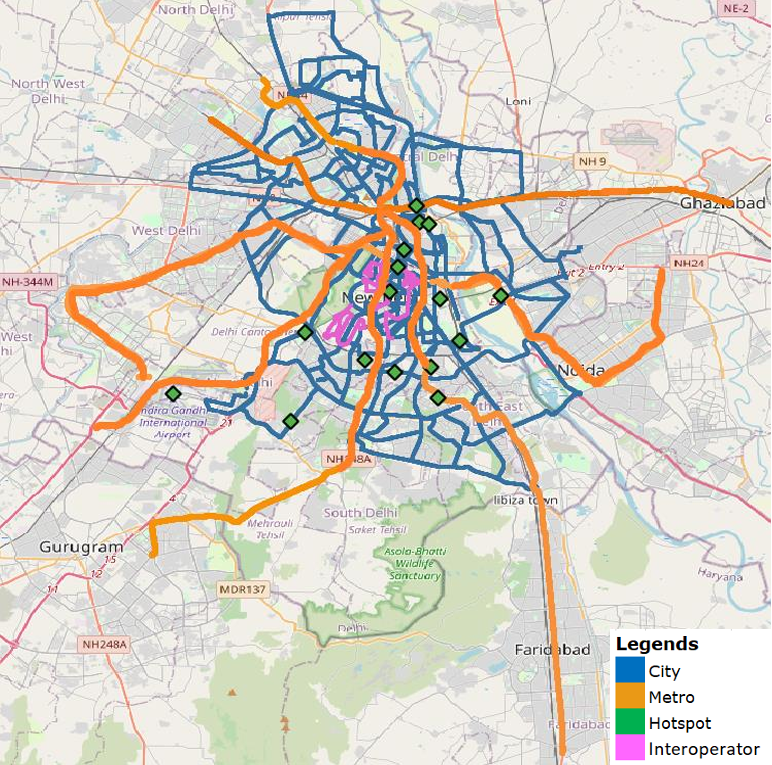
Voice Call Performance in 3G/2G Networks in Delhi LSA
Voice call performance on 3G/2G networks in Delhi is an essential metric for understanding the quality of service provided by major telecom operators. This report delves into the performance of these networks, highlighting call setup success rates, drop rates, and the implications of spectrum utilization by different operators. Specifically, it focuses on how Airtel, MTNL, and Vodafone Idea (VIL) manage their 3G and 2G networks to cater to users, especially those with feature phones.

In a city like Delhi, where telecom services are pivotal, the effectiveness of 3G/2G networks still holds considerable relevance. Users with older handsets depend on these networks for their communication needs. This analysis explores how well service providers meet these needs through a thorough examination of voice call performance metrics.
Importance of Network Performance
Network performance, particularly in 3G/2G modes, remains critical for ensuring that all segments of the population have access to reliable voice services. For feature phone users and those in areas with limited 4G/5G coverage, the dependability of 3G/2G networks is non-negotiable. Therefore, evaluating the performance of these networks helps identify areas for improvement and ensures that all users have access to quality communication services.
Testing Methodology
The voice call performance evaluation was conducted exclusively within the Delhi License Service Area (LSA) and focused on handsets that support only 3G/2G networks. This approach ensures that the findings are highly relevant to users who rely on these legacy technologies. The performance indicators measured include call attempts, setup success rates, drop call rates, and more.
Key Metrics
Various key performance indicators provide insights into the quality of service delivered by the providers, including call setup success rates, drop rates, and handover success rates.
Call Attempts
The number of call attempts made during the testing period provides a baseline for analyzing success and failure rates:
Airtel: 1073
MTNL: 1091
VIL: 1070
Call Setup Success Rate
The success rate of calls being connected out of the total attempts made is a crucial indicator:
Airtel: 99.44%
MTNL: 98.72%
VIL: 99.72%
VIL’s superior call setup success rate suggests robust network reliability.
Drop Call Rate
The rate at which calls are dropped unexpectedly after being successfully established is a critical measure of stability:
Airtel: 0.94%
MTNL: 7.24%
VIL: 1.31%
MTNL’s high drop call rate highlights issues in maintaining call continuity.
Call Setup Time
The average time taken to establish a call:
Airtel: 3.17 seconds
MTNL: 2.83 seconds
VIL: 3.47 seconds
MTNL’s shorter setup time is overshadowed by its higher drop rate.
Handover Success Rate
Handover success rates indicate how smoothly calls are transferred between cells without being dropped:
Airtel: 97.69%
MTNL: 99.98%
VIL: 99.70%
Coverage Analysis
The analysis of unique cell IDs covered provides insights into the network reach:
Airtel: 1979 (2G)
MTNL: 1 (2G), 627 (3G)
VIL: 294 (2G), 1030 (3G)
Spectrum Utilization Overview
Understanding how each operator utilizes its allocated spectrum bands sheds light on their network strategies and performance outcomes.
MTNL’s Spectrum Strategy
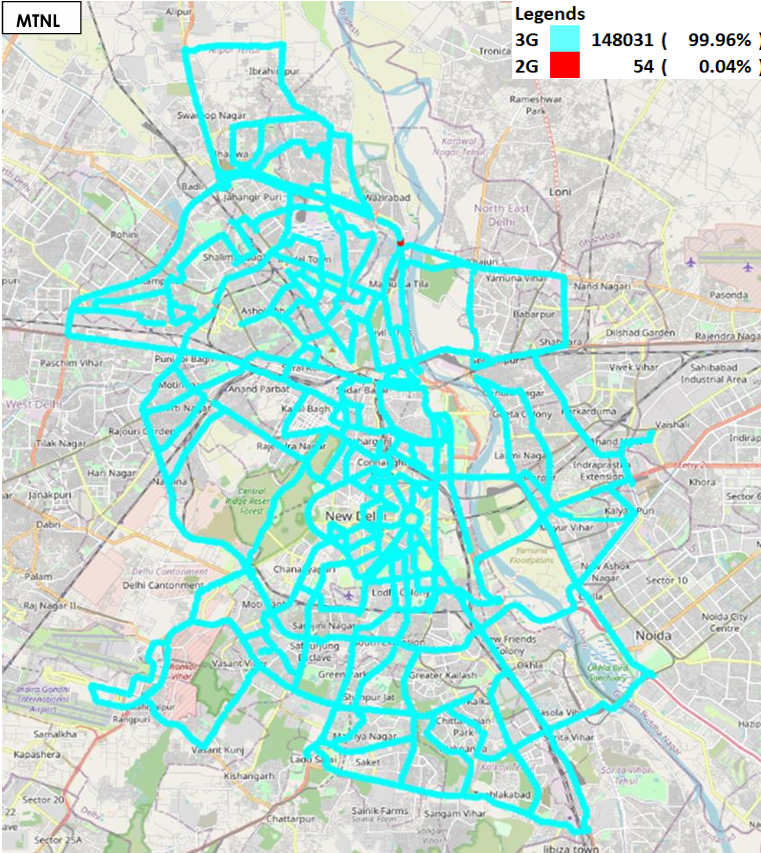
MTNL’s nearly absent 2G network in Delhi suggests that it has repurposed its 900 MHz spectrum, which includes 6.2 MHz, primarily for 3G services. By combining 5 MHz from the 2100 MHz band, MTNL attempts to create a 10 MHz capacity for its 3G network. However, this approach is suboptimal for feature phone users without carrier aggregation capabilities, as they can only use 5 MHz for uploads and downloads. This limitation contributes to MTNL’s poor data performance in the region.
VIL’s Spectrum Deployment
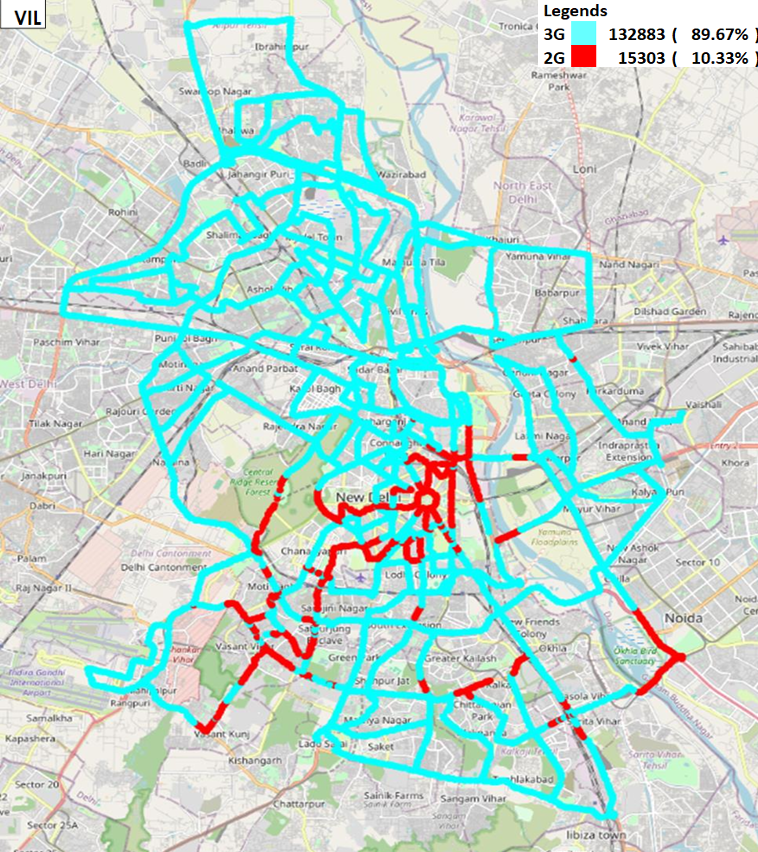
Vodafone Idea (VIL) manages a mixed deployment strategy, holding 10 MHz in the 900 MHz band, 5 MHz in the 2100 MHz band, and 10 MHz in the 1800 MHz band. Its 3G network likely combines spectrum from the 900 MHz and 2100 MHz bands, while its 2G services operate on the 1800 MHz band. The 1800 MHz band’s higher frequency offers less effective coverage, leading to weaker 2G signal presence in Delhi.
Airtel’s Spectrum Allocation
Airtel has dismantled its 3G network in Delhi and now exclusively relies on its 2G GSM network to support feature phone users. With 6 MHz in the 900 MHz band and 7 MHz in the 1800 MHz band, Airtel has dedicated its 1800 MHz spectrum to bolster its 2G network. The 900 MHz and 2100 MHz bands are likely allocated for its 4G services, enhancing overall network efficiency for smartphone users while ensuring robust 2G support for feature phone users.
Comparison of Call Setup Success
Among the service providers, VIL leads with the highest call setup success rate, followed closely by Airtel, with MTNL trailing.
Analysis of Drop Call Rate
Airtel’s low drop call rate underscores its stability in providing uninterrupted voice services, whereas MTNL’s high drop rate suggests significant network issues.
Call Setup Time Comparison
While MTNL boasts the shortest setup time, the frequent call drops it experiences negate this advantage, affecting the overall user experience.
Handover Success Rate Insights
MTNL’s nearly perfect handover success rate suggests an efficient transition mechanism between network cells, which is crucial for maintaining ongoing calls without interruptions.
Signal Strength Overview
Signal strength plays a vital role in ensuring call quality, with Airtel and VIL showing a higher percentage of samples in the excellent range compared to MTNL.
Network Time Distribution
The allocation of time spent on 2G and 3G networks during testing highlights the distinct strategies of each provider:
Airtel: 100% on 2G
MTNL: 99.96% on 3G, 0.04% on 2G
VIL: 89.67% on 3G, 10.33% on 2G
Insights on RJIL
RJIL’s absence of a 3G/2G network and its focus on more advanced technologies sets it apart from other providers analyzed in this report.
Summary of Findings
VIL’s network strategy results in the highest call setup success rate, while Airtel’s focus on its 2G network provides stable voice call experiences for feature phone users. MTNL’s performance, however, is hindered by its poor spectrum utilization strategy.
Implications for Users
Users seeking reliable 2G services may prefer Airtel, whereas those requiring better 3G connectivity might lean towards VIL. MTNL’s current spectrum strategy may need reassessment to improve user experience.
Analysis of Network Utilization and Technology Affinity in Delhi LSA
Evaluating the network utilization in auto-selection mode reveals intriguing insights into how service providers leverage their technology stacks.
Frequency Bands in Use
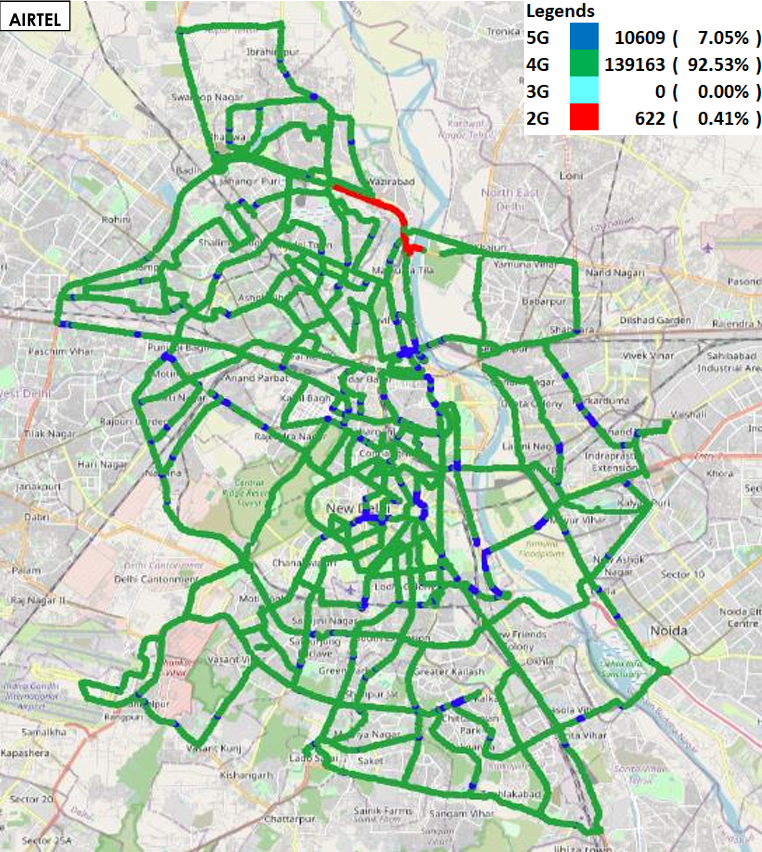
Bharti Airtel Ltd.: Airtel’s deployment spans 2G on 900 and 1800 MHz, 4G on 900, 1800, 2100, and 2300 MHz, and 5G on the 3500 MHz band.
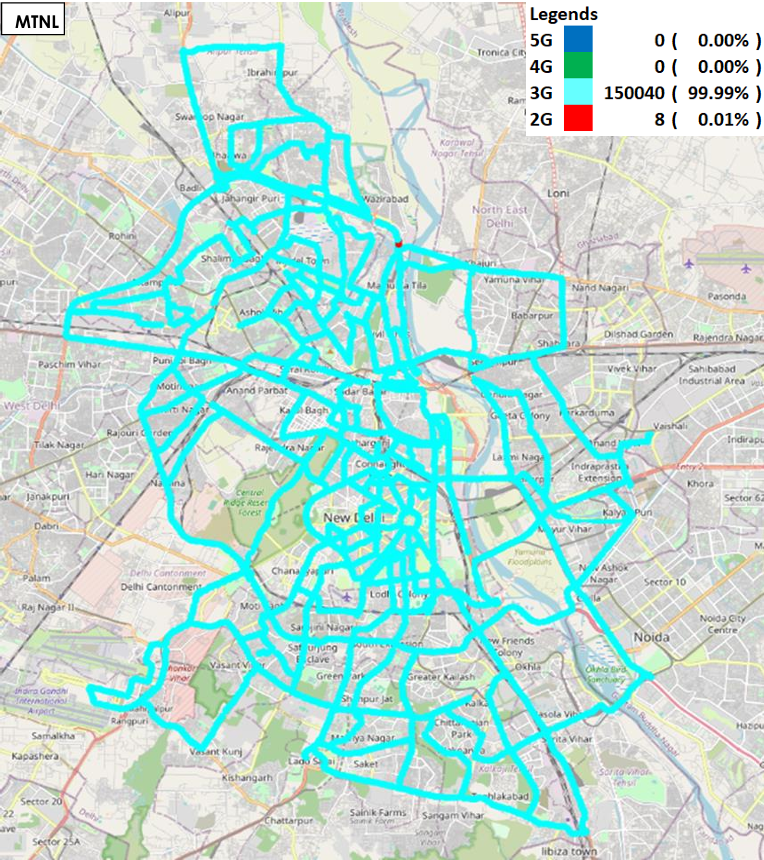
MTNL: Primarily focused on 2G at 900 and 1800 MHz and 3G on 2100 MHz, MTNL lacks a significant 4G or 5G presence.
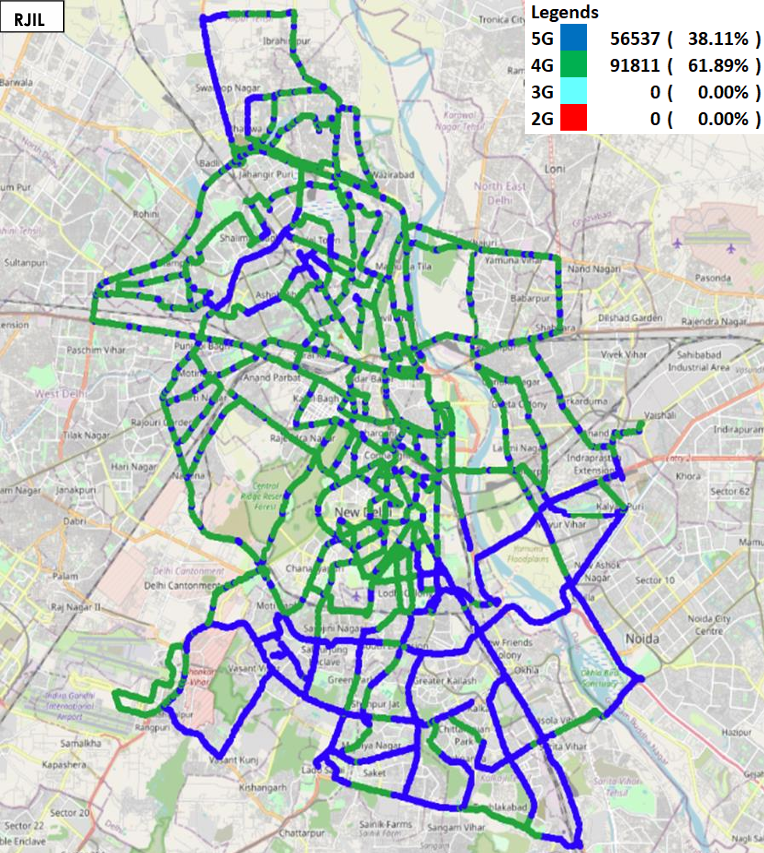
Reliance Jio Infocomm Ltd.: Jio uses 4G across 850, 1800, and 2300 MHz and 5G on 700 and 3500 MHz, demonstrating its strong foothold in next-gen networks.
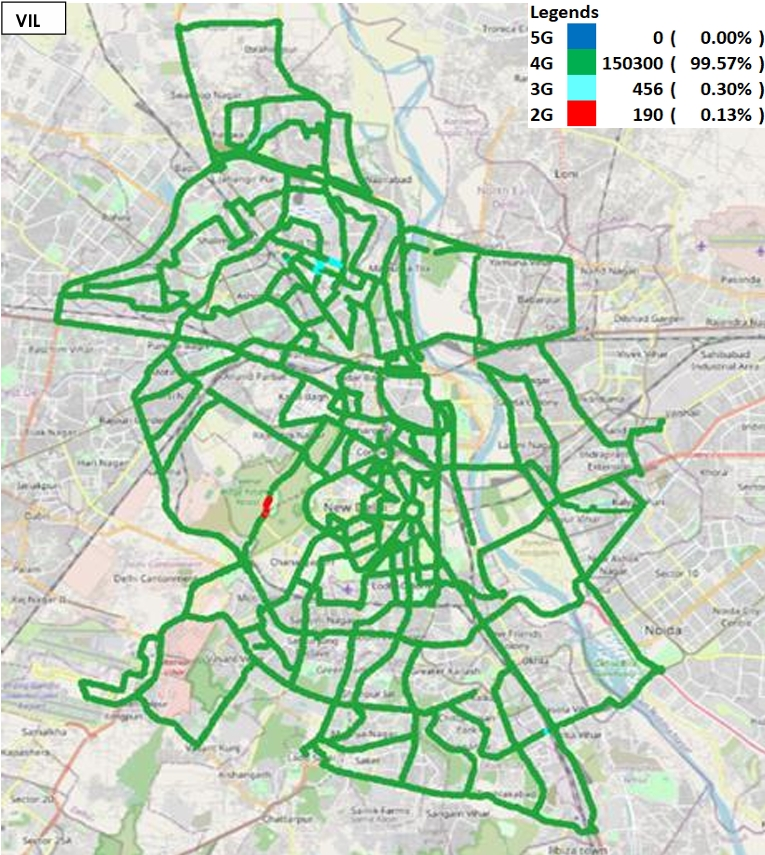
Vodafone Idea Ltd.: Vodafone Idea (VIL) covers 2G on 1800 MHz, 3G on 2100 MHz, and 4G on 900, 1800, 2100, and 2500 MHz.
Network Technology Usage in Urban Environments
Citywide Network Usage
Airtel: Spends 7.05% on 5G and 92.53% on 4G, reflecting a strong inclination towards 4G, with burgeoning 5G use.
MTNL: Predominantly 3G at 99.99%, indicating its lack of investment in 4G or 5G.
Reliance Jio: Balances between 38.11% 5G and 61.89% 4G, showcasing its aggressive push towards standalone 5G.
Vodafone Idea: Almost entirely on 4G at 99.57%, with minimal fallback to 3G.
Metro Route Analysis
Performance across various metro routes highlights the strengths and weaknesses of each provider’s network infrastructure. For instance:
Noida to Dwarka: RJIL leads with a significant 44.08% time on 5G, followed by Airtel at 6.49% on 5G and 93.51% on 4G.
Yashobhoomi to New Delhi: Airtel’s 4G coverage dominates at 71.29%, but significant no-service areas persist, while RJIL maintains robust 4G service.
Network Performance Analysis
Voice Call Performance
Voice services are essential in assessing user experience, with metrics such as call setup success rate, drop call rate, and Mean Opinion Score (MOS) being critical indicators.
Call Setup Success Rate: Airtel and VIL top the chart with 99.25%, indicating reliable voice connectivity.
Drop Call Rate: MTNL’s high drop call rate of 7.23% starkly contrasts with Airtel’s low 0.12%, highlighting severe network reliability issues for MTNL.
Call Setup Time: RJIL’s swift 0.73-second setup time leads, while MTNL lags at 3.27 seconds.
Data Performance
Download Throughput
Reliance Jio: Tops with an impressive 231.82 Mbps average, reflecting its extensive spectrum utilization.
Airtel: Follows with 171.44 Mbps, driven by its strong 4G backbone and emerging 5G presence.
Upload Throughput
Airtel excels with 34.37 Mbps, capitalizing on its efficient spectrum deployment.
Hotspot and Metro Route Performance
Hotspot areas reveal critical performance insights:
Airtel: Exhibits superior 5G performance at hotspots, with 268 Mbps download speeds.
Metro Routes: Generally, lower speeds are observed, with MTNL’s data performance trailing behind due to a lack of 4G deployment.
Key Findings
Bharti Airtel
Airtel demonstrates a robust 4G performance with promising 5G growth. However, specific hotspots and metro routes present opportunities for improvement, especially in minimizing no-service zones.
MTNL
MTNL’s focus on 3G significantly hampers its competitive edge, with high drop call rates and poor data speeds indicating urgent need for network upgrades.
Reliance Jio
Jio’s aggressive 5G deployment is evident, yet the network’s reliance on 4G in various areas indicates ongoing transition challenges. Still, its data speeds are commendable.
Vodafone Idea
VIL’s focused 4G strategy results in decent call success rates, but its data speeds fall short of competitors, suggesting a need for network enhancement to meet growing data demands.
Analyzing the distribution of time spent across network technologies reveals critical operational insights:
Airtel: Predominance of 4G
With a staggering 92.53% utilization of 4G, Airtel’s network shows a firm commitment to maintaining a solid 4G foundation while gradually rolling out 5G services. The reliance on the 900 MHz band for 4G provides excellent coverage but hints at congestion challenges during peak usage.
Reliance Jio: Strategic 5G Expansion
Jio’s 38.11% 5G utilization signifies an aggressive push for standalone 5G, leveraging the 700 MHz band for superior coverage. The extensive 4G infrastructure still plays a critical role in ensuring service continuity.
Vodafone Idea: Streamlined 4G Focus
VIL’s near-total reliance on 4G, with negligible fallback to older technologies, underscores its strategy to cater predominantly to data-centric users. This approach ensures a streamlined service but may alienate legacy network users.
MTNL: Underutilization and Challenges
MTNL’s exclusive 3G focus reflects a glaring underutilization of potential 4G/5G capabilities, leading to subpar user experiences, especially in data-intensive scenarios.
Delhi’s telecom performance presents a diverse landscape where each provider’s strategic deployment of technologies directly impacts user experience. Airtel and RJIL lead in data performance, while VIL shows strength in voice call reliability. MTNL, however, faces significant challenges due to its limited adoption of modern network technologies. Future improvements across metro routes and hotspots will be critical for enhancing the overall QoS for Delhi’s rapidly growing user base.
MOBILE Network Analysis of Hyderabad

Voice Call Performance in 3G/2G Networks in AP LSA
In October 2024, a comprehensive study was conducted in Hyderabad to evaluate the voice call performance of major telecom providers operating on 3G/2G networks. This assessment focused on users who rely on 3G/2G compatible devices, offering a clear picture of network reliability and efficiency. The telecom operators tested were Airtel, BSNL, and Vodafone Idea Ltd. (VIL), providing valuable insights into call success rates, drop rates, and network coverage.

Airtel’s Voice Call Performance
Airtel’s performance in the 3G/2G network mode was notably strong, with 512 call attempts made during the test. The provider boasted an impressive call setup success rate of 99.61%, with a minimal drop call rate of 0.39%. On average, calls were set up in 6.04 seconds, reflecting a balance between efficiency and reliability. Airtel also covered 929 unique cell IDs on its 2G network, highlighting its extensive reach within the city.
BSNL’s Dual Network Operation
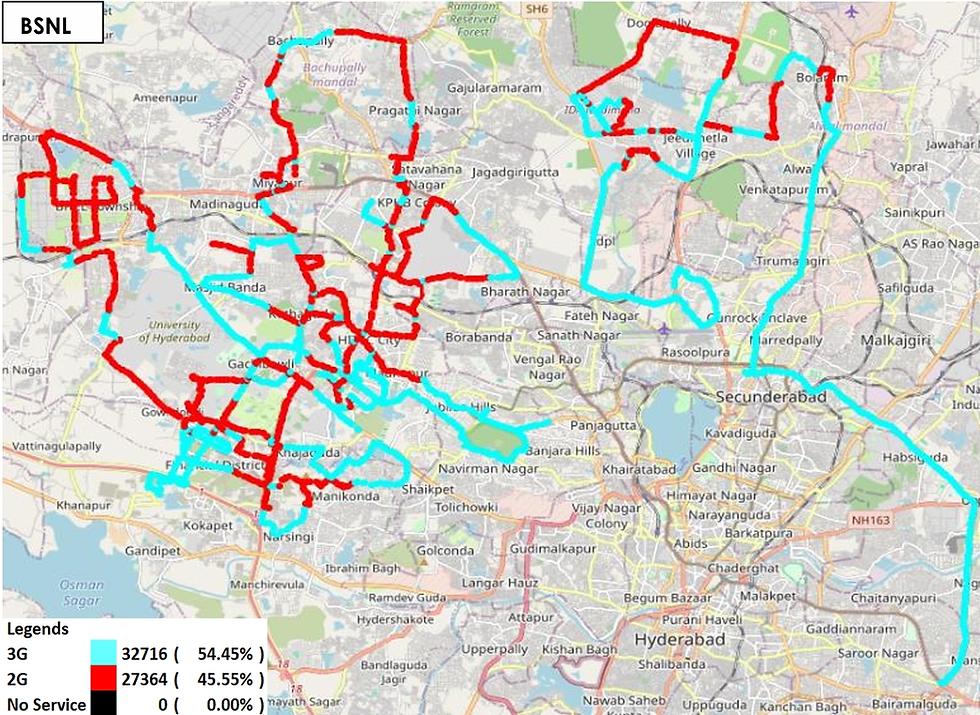
BSNL demonstrated robust coverage with a total of 529 call attempts. Despite operating both 2G and 3G networks, BSNL achieved a call setup success rate of 99.05% and a drop call rate of 3.63%. Interestingly, BSNL’s average call setup time was just 2.73 seconds, the fastest among the providers tested. The handover success rate for BSNL stood at an impressive 99.88%, indicating a seamless transition between network cells. BSNL managed 205 unique cell IDs on 2G and 133 on 3G, showcasing its dedication to maintaining a dual network.
Vodafone Idea Ltd. (VIL) and Its Transition
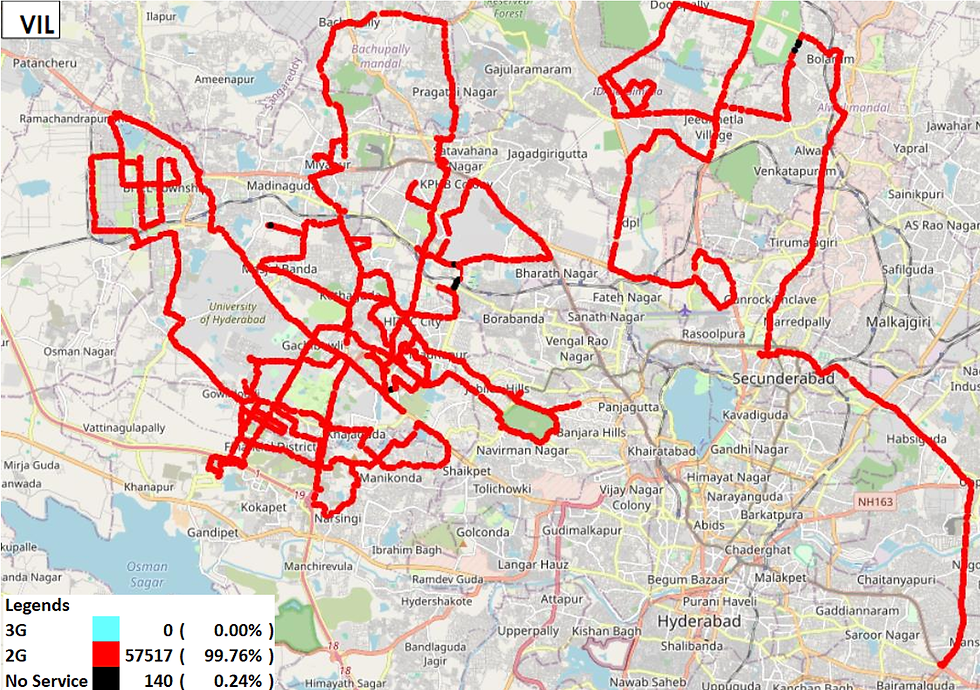
VIL, with 499 call attempts, recorded a 97.39% call setup success rate and a 2.88% drop call rate. However, its average call setup time was notably longer at 16.07 seconds. With 593 unique cell IDs covered on its 2G network, VIL has completely phased out its 3G network in Hyderabad. This strategic shift aligns with VIL’s move to repurpose its 5 MHz spectrum in the 2100 MHz band for 4G services, signaling a broader focus on enhancing 4G coverage.
Network Distribution and Usage Patterns
The test, conducted between October 22 and 25, 2024, provided a detailed analysis of the time spent on each operator’s network. Unlike Delhi, where VIL still maintained a limited 3G presence, Hyderabad saw a complete shift away from 3G for VIL. This reallocation of the 2100 MHz spectrum for 4G deployment underscores VIL’s commitment to strengthening its 4G network infrastructure.
In contrast, BSNL continues to operate both 2G and 3G services. Its spectrum allocation indicates that the 900 MHz band is fully utilized for 2G, while a significant portion of the 2100 MHz band remains dedicated to 3G. This fragmented spectrum utilization highlights BSNL’s slower progression towards a comprehensive 4G rollout, which impacts its ability to deliver consistent high-speed data services.
Implications for Users in Hyderabad
The findings from this study are crucial for users relying on 3G/2G networks in Hyderabad. Airtel’s high call setup success rate and low drop rate make it a reliable option for voice calls. BSNL’s swift call setup times are advantageous, although its higher drop rate could be a concern. VIL’s transition to a 4G-focused approach may benefit users with modern devices but could impact those still dependent on 3G services.
In summary, as Hyderabad evolves into a more 4G-centric market, users with legacy handsets may face challenges with network reliability. The ongoing transitions by operators like VIL and BSNL reflect a broader industry trend towards 4G and beyond, necessitating upgrades for users seeking optimal voice call performance.
Analysis of Network Utilization and Technology Affinity in AP LSA
The telecom landscape in Hyderabad is evolving rapidly, with service providers like Airtel, BSNL, RJIL (Reliance Jio), and Vodafone Idea Limited (VIL) striving to deliver robust network performance across various technologies. This comprehensive analysis delves into a recent drive test conducted to evaluate the network utilization and technology preferences of these providers. The study spans multiple areas, including city hotspots and metro routes, assessing the performance of 2G, 3G, 4G, and 5G networks.


Airtel’s Network Utilization in Hyderabad
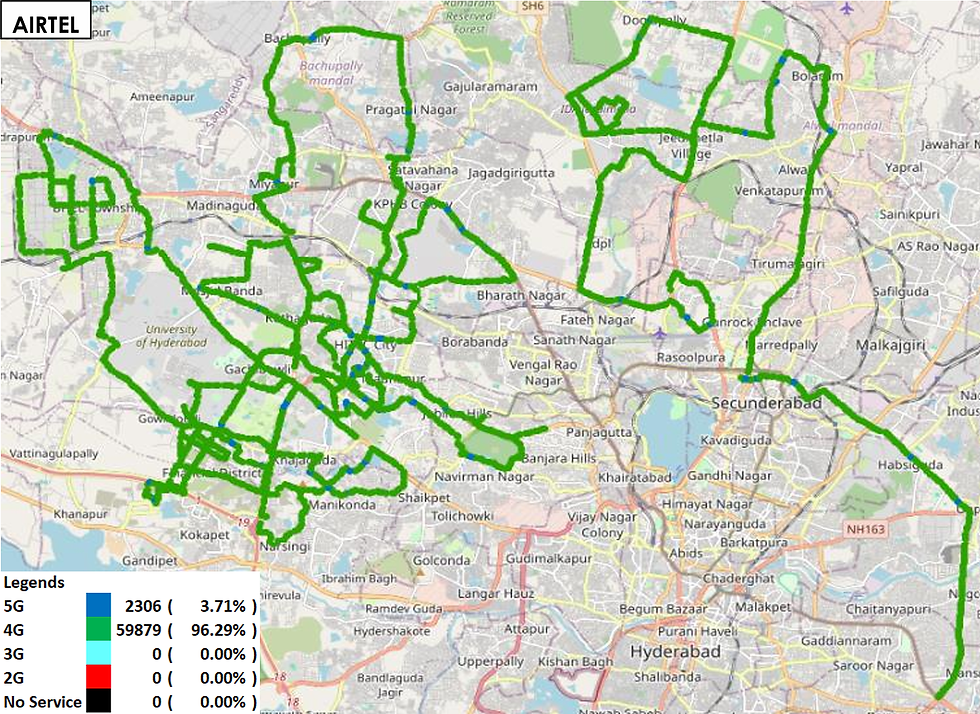
Airtel employs a diverse range of network technologies, including 2G, 4G, and 5G. During the drive test, Airtel’s network displayed a significant inclination towards 4G, with a staggering 96.29% of its time in auto-selection mode spent on this technology. Interestingly, Airtel’s 5G connectivity accounted for only 3.71% of the time, revealing a cautious rollout in Hyderabad.
When devices were set to 3G/2G mode, Airtel spent 100% of its time on 2G. This indicates a strategic focus on maintaining strong 4G services while gradually introducing 5G. The limited usage of 5G, despite its nationwide rollout claims, suggests that Airtel is still expanding its 5G infrastructure in the region.
BSNL’s Reliance on Legacy Networks
BSNL’s network operation is primarily based on 2G and 3G technologies, with no active deployment of 4G or 5G in Hyderabad. The drive test results revealed that in 3G/2G mode, BSNL’s network allocated 54.45% of its time to 3G and 45.55% to 2G. In auto-selection mode, BSNL’s network usage was almost evenly split between 3G (51.19%) and 2G (48.5%).
This reliance on older technologies significantly hampers BSNL’s ability to deliver high-speed mobile services, reflected in their lower data throughput compared to competitors. The absence of 4G services further highlights the company’s lag in adapting to modern network standards.
Reliance Jio’s Dominance in 5G Utilization
Reliance Jio (RJIL) stands out with its aggressive 5G adoption. In the drive test, RJIL’s network spent 53.52% of its time connected to 5G, with the remaining 46.44% on 4G. This robust 5G presence can be attributed to Jio’s deployment in the 700 MHz band, offering superior coverage and indoor penetration.
However, the significant portion of time spent on 4G raises questions about Jio’s 5G capacity and coverage completeness. Despite leading in 5G rollout, the network still shows a notable reliance on 4G, suggesting that there is ongoing work to enhance 5G network density and capacity.
Vodafone Idea’s Balanced Network Approach
Vodafone Idea Ltd. (VIL) demonstrates a balanced approach, utilizing 2G, 3G, and 4G technologies. The drive test indicated that VIL spent 98.87% of its time on 4G in auto-selection mode, with only 1.13% on 2G. In 3G/2G mode, the network allocated 99.76% of its time to 2G, signaling a fallback on legacy networks in certain scenarios.
VIL’s strategy appears to focus heavily on 4G services, likely to maximize the efficiency of its spectrum holdings. The minimal time spent on older technologies suggests a strategic shift towards modernizing its network capabilities while maintaining 2G services for legacy users.
Voice Call and Data Performance Across Providers
Voice Call Success Rates:
Airtel: Achieved a call setup success rate of 99.61% in 3G/2G mode and 100% in auto-selection mode.
BSNL: Registered a call setup success rate of 99.05% in 3G/2G mode.
VIL: Managed a success rate of 97.39% in 3G/2G mode.
Data Throughput Performance:
Airtel: Led with an average download speed of 119.88 Mbps, reaching 124.54 Mbps in the city.
RJIL: Excelled with an average download speed of 164.19 Mbps, peaking at 162.03 Mbps in the city.
BSNL: Lagged behind with an average speed of just 1.28 Mbps in the city.
Metro Routes and Hotspot Performance
On metro routes like Nagole to Raidurg, RJIL spent a substantial 77.69% of its time on 5G, while on the Miyapur to LB Nagar route, the network allocated 62.88% to 5G. Hotspot analysis showed varying data speeds, with locations like Cyber Towers and JNTU Junction exhibiting high download speeds, contrasting with lower speeds at Gachibowli Flyover and Mind Space.
Key Observations and Insights
The drive test highlights distinct network utilization patterns among providers:
Airtel and RJIL showcase a strong focus on 4G and 5G, with extensive use of these technologies in auto-selection mode.
BSNL remains heavily reliant on 2G and 3G, lacking the capacity to compete in high-speed data services.
VIL exhibits a balanced usage of legacy and modern networks, though its strategic priority appears to be on enhancing 4G services.
MOBILE Network Analysis of Jaipur
Voice Call Performance in 3G/2G Networks in Rajasthan LSA
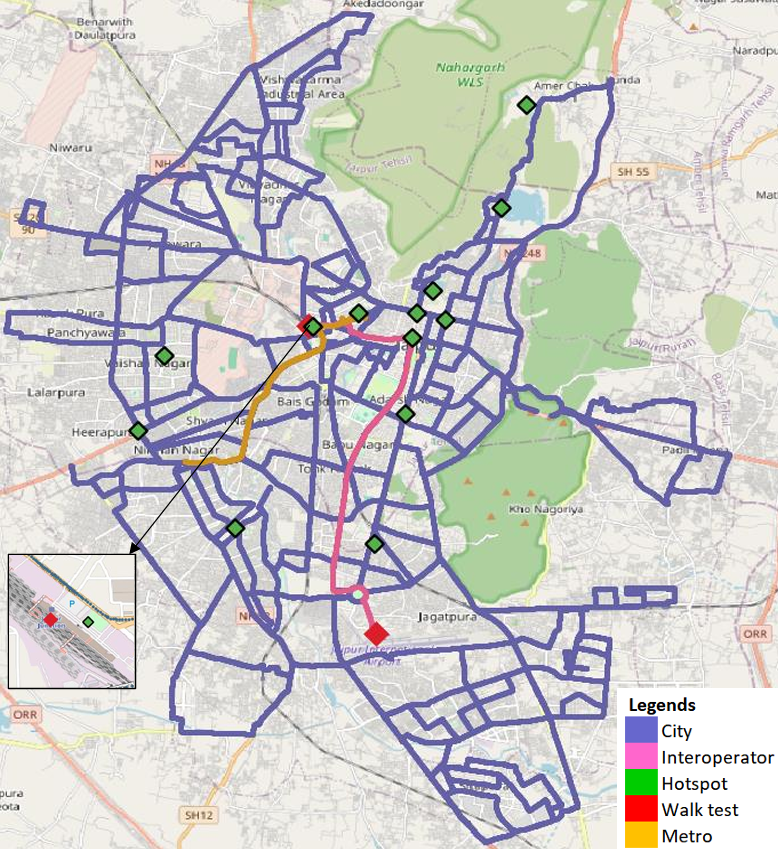
The drive test conducted in Jaipur between October 14th and 29th, 2024, provides a detailed look at the performance of various operators in 3G and 2G modes. Consistent with similar evaluations in Delhi and Hyderabad, this analysis examines the percentage of time handsets remained on each operator’s network when set to 3G/2G mode. It’s worth noting that Reliance Jio (RJIL) is absent from this analysis due to its exclusive operation on 4G and 5G networks, thereby excluding it from the 2G and 3G segment.


Airtel: Streamlining 4G with Focused Spectrum Allocation
Airtel has strategically phased out its 3G network in Jaipur, reallocating its substantial spectrum to bolster 4G services. With 10 MHz in the 900 MHz band and 15 MHz in the 1800 MHz band, Airtel has likely transitioned its 2G services to the 1800 MHz band. This move optimizes the more efficient 900 MHz band for enhanced 4G coverage and capacity, ensuring minimal but essential support for basic voice services. This strategy mirrors Airtel’s broader efforts to maximize 4G efficiency across its markets.
BSNL: Struggles with Legacy Network Constraints
BSNL’s network strategy in Jaipur reveals challenges primarily due to limited spectrum availability. With just 5 MHz in the 2100 MHz band, BSNL operates its 2G services on the 900 MHz band and its 3G services on the 2100 MHz band. While the 900 MHz band offers superior coverage, it comes at the cost of data performance, causing handsets to spend more time on BSNL’s 2G network. This limitation underscores BSNL’s struggle to provide competitive data services due to its rigid spectrum allocation.
Vodafone Idea (VIL): Spectrum Limitations Impacting Reach
Vodafone Idea’s network strategy in Jaipur likely faces similar challenges, with a constrained ability to fully utilize its spectrum. VIL appears to maintain a partial reliance on legacy networks in high-frequency bands, potentially affecting overall performance. The exact details of VIL’s spectrum reallocation were not covered, but the implications of suboptimal spectrum use are evident.
Voice Call Performance in 3G/2G Modes
The drive test in Jaipur focused on voice call performance in 3G/2G modes, providing insights into the experience of users with only 3G/2G compatible devices. Here are the key findings:
Airtel: Achieved a 99.45% call setup success rate with a 0.00% drop call rate. The average call setup time was 3.65 seconds, and the handover success rate stood at 97.36%.
BSNL: Recorded a 99.45% call setup success rate with a 1.37% drop call rate. The average call setup time was 2.65 seconds, and the handover success rate was an impressive 99.55%.
Vodafone Idea (VIL): Notched a 98.08% call setup success rate with a 0.14% drop call rate. The average call setup time was 3.54 seconds, with a handover success rate of 96.78%.
Network Coverage and Signal Strength Distribution
The testing further revealed the number of unique cell IDs covered in 3G/2G modes:
Airtel: 0 for 3G and 1301 for 2G
BSNL: 462 for 3G and 565 for 2G
VIL: 0 for 3G and 1013 for 2G
In this scenario, Airtel spent 100% of the time on 2G networks, BSNL allocated 36.12% to 3G and 63.86% to 2G, and VIL spent a negligible 0.16% on 3G and 99.84% on 2G.
Signal strength distribution for 3G/2G modes highlighted the following:
Airtel: 58% of samples in the excellent category.
BSNL: 25% of samples in the excellent category.
VIL: 36% of samples in the excellent category.
Analysis of Network Utilization and Technology Affinity in Rajasthan LSA
In the ever-evolving landscape of telecommunications, understanding how different network technologies are utilized by operators is crucial. This analysis delves into the usage patterns of 5G, 4G, 3G, and 2G technologies among major telecom providers in Jaipur, shedding light on their spectrum management strategies and deployment efficiencies.


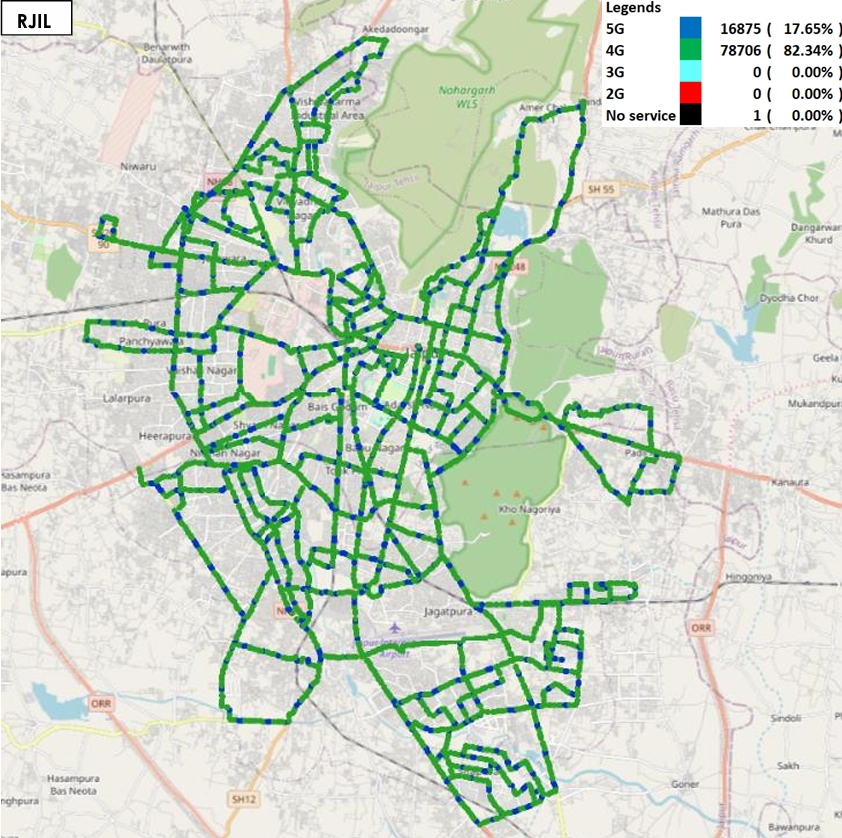
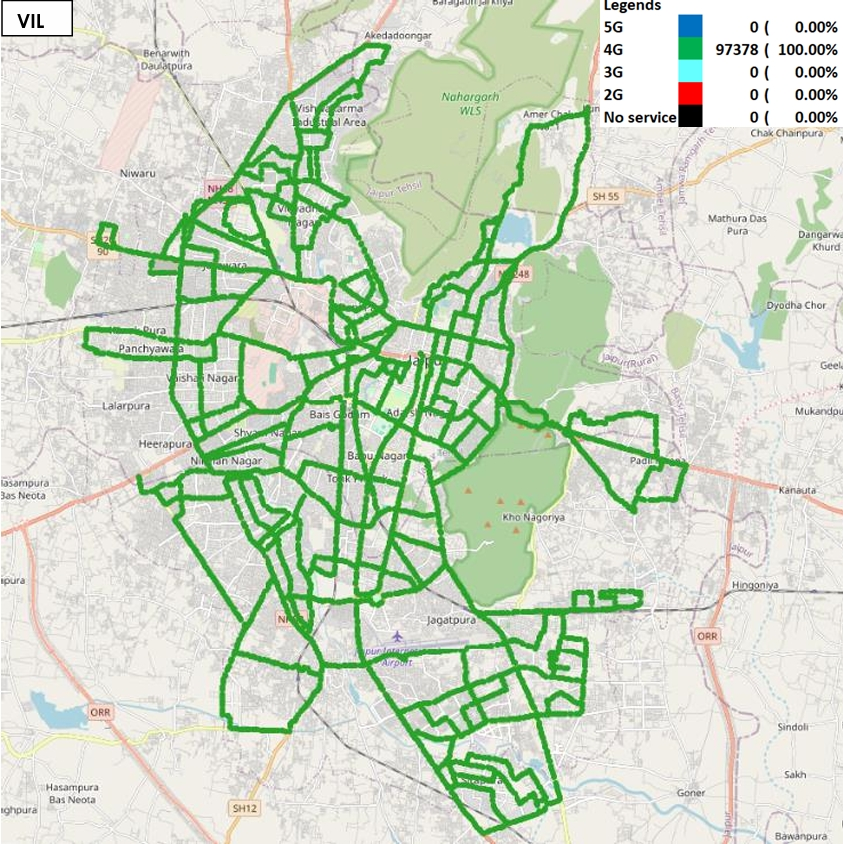
Airtel’s Dominance in 4G and Limited 5G Deployment
Airtel users in Jaipur demonstrate a strong preference for 4G, spending a significant 96.36% of their time on this network. This reflects Airtel’s strategic focus on reallocating its spectrum, particularly shifting 2G services from the 1800 MHz band to bolster its 4G network on the 900 MHz band. Interestingly, Airtel’s 5G presence remains minimal, accounting for only 3.64% of the time. This indicates a conservative approach to 5G rollout, with deployment restricted to the 3500 MHz band, leaving mid-band spectrum untouched for 5G expansion. Thus, while Airtel’s 4G infrastructure in Jaipur is robust, its 5G deployment is symbolic at best, highlighting a cautious strategy in transitioning to newer technologies.
BSNL’s Sparse 4G Network and Dependence on Legacy Technologies
BSNL’s network in Jaipur shows a stark contrast, with a mere 3.92% of user time on 4G, indicating limited deployment and coverage. The operator’s reliance on a small 5 MHz holding in the 2100 MHz band and attempts to deploy 4G on the 700 MHz band have not translated into substantial network presence. Consequently, BSNL’s users predominantly rely on 2G (72.82%) and 3G (22.87%) networks. This reliance on older technologies underlines a significant gap in BSNL’s 4G network efficiency and deployment strategy in Jaipur, making it less competitive in a market moving towards 5G.
Reliance Jio’s Partial 5G Penetration and Strong 4G Dependence
Reliance Jio (RJIL) users in Jaipur show substantial engagement with 4G, accounting for 82.34% of their connection time, while 5G usage stands at 17.65%. Despite Jio’s deployment of 5G in the 700 MHz band, known for its excellent propagation characteristics, the lower-than-expected 5G usage suggests incomplete network coverage or capacity constraints. If Jio’s 5G network were fully realized, devices would naturally prioritize its superior coverage, yet the data points to an ongoing reliance on its extensive 4G network, indicating that full 5G penetration in Jaipur is still a work in progress.
Vodafone Idea’s Full Transition to 4G
Vodafone Idea (VIL) has fully transitioned to 4G, with users spending 100% of their time on this network. The complete shift of its 10 MHz holding in the 900 MHz band to 4G services signifies VIL’s strategic departure from older technologies. This exclusive reliance on 4G showcases a focused approach to delivering a consistent and optimized data experience. With no fallback to 2G or 3G, VIL’s network in Jaipur exemplifies a fully modernized and efficient use of spectrum resources.
Network Technology Utilization Across Jaipur
A closer look at the Independent Drive Test (IDT) report reveals broader trends in network technology usage across Jaipur:
Airtel: Predominantly 4G (96.36%), with negligible 5G presence (3.64%).
BSNL: Heavy reliance on 2G (72.82%), moderate use of 3G (22.87%), and minimal 4G (3.92%).
Reliance Jio (RJIL): Major use of 4G (82.34%) with growing 5G engagement (17.65%).
Vodafone Idea (VIL): Exclusively 4G (100%), with no usage of 2G or 3G.
Metro Routes and Technology Preferences
When examining metro routes in Jaipur, distinct preferences emerge:
Airtel continues to dominate with 4G usage at 89.05%, with a slight 5G presence (2.85%). However, limited or no service was recorded in 8.10% of the samples, indicating potential coverage gaps.
BSNL maintains its reliance on 2G (65.17%) and 3G (8.37%), with a significant portion of no service or limited service instances (14.45%).
Reliance Jio (RJIL) exhibits a balanced usage between 4G (82.95%) and 5G (17.05%).
Vodafone Idea (VIL): Maintains exclusive 4G usage across metro routes, reinforcing its network optimization.
Key Observations and Insights
Airtel’s robust 4G network is complemented by a cautious 5G rollout.
BSNL lags in 4G deployment, heavily relying on outdated 2G and 3G networks.
Reliance Jio shows a gradual but incomplete shift towards 5G.
Vodafone Idea showcases an entirely 4G-centric approach, underscoring its commitment to modern network infrastructure.
Performance Metrics and Download Speeds
Analyzing download throughput across Jaipur provides additional insights:
Reliance Jio (RJIL) leads with the highest average download speeds, reinforcing its competitive edge in data services.
Airtel follows closely, delivering substantial speeds across various test environments.
Vodafone Idea (VIL), while fully transitioned to 4G, shows lower average download speeds compared to RJIL and Airtel.
BSNL, constrained by its limited 4G network, records the lowest speeds, further underscoring its struggle in modern network performance.
The analysis of network technology utilization in Jaipur reveals distinct strategies and performance levels among telecom operators. Airtel and Jio lead with their extensive 4G networks and emerging 5G services, while Vodafone Idea’s exclusive 4G focus showcases a streamlined approach. BSNL, however, faces significant challenges with its limited 4G presence and continued reliance on legacy technologies. As the telecommunications landscape evolves, these patterns highlight the importance of strategic spectrum deployment and technological advancement in enhancing user experience.
MOBILE Network Analysis of Ahmednagar
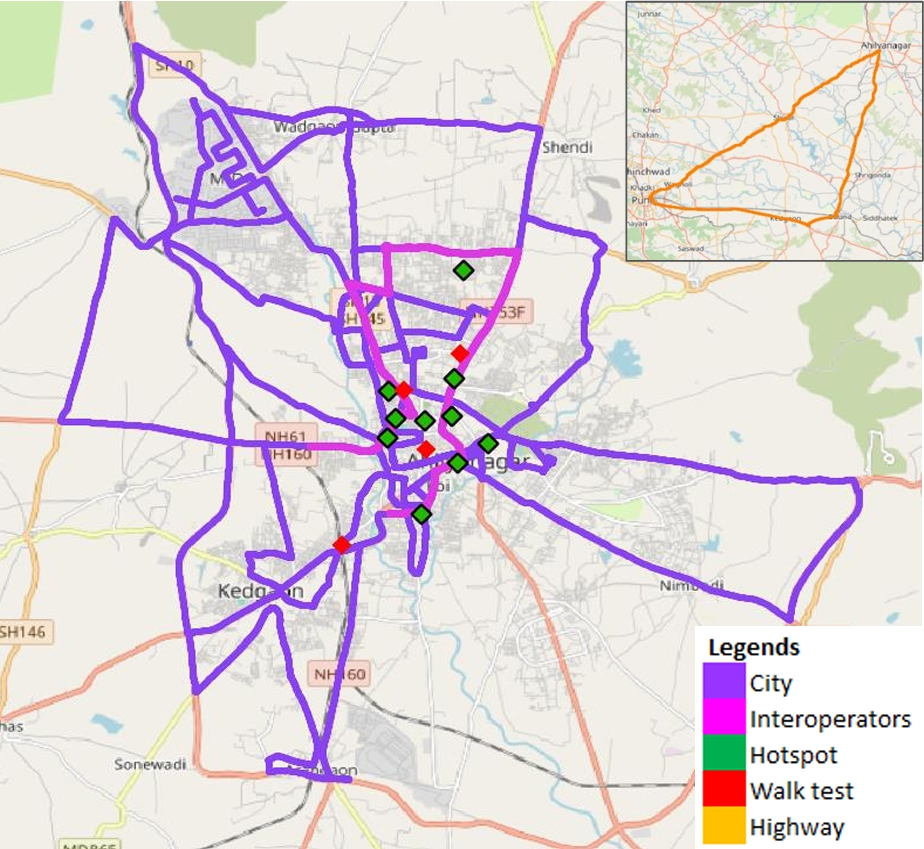
Voice Call Performance in 3G/2G Networks in Maharashtra LSA
The drive test conducted in Ahmednagar from 21st to 25th October 2024 offers insightful data on how mobile handsets connect to various operators’ networks in 3G and 2G modes. This analysis mirrors similar studies conducted in Delhi, Hyderabad, and Jaipur, providing a comparative understanding of network usage and performance. Notably, Reliance Jio (RJIL) is absent from this evaluation due to its exclusive focus on 4G and 5G services.

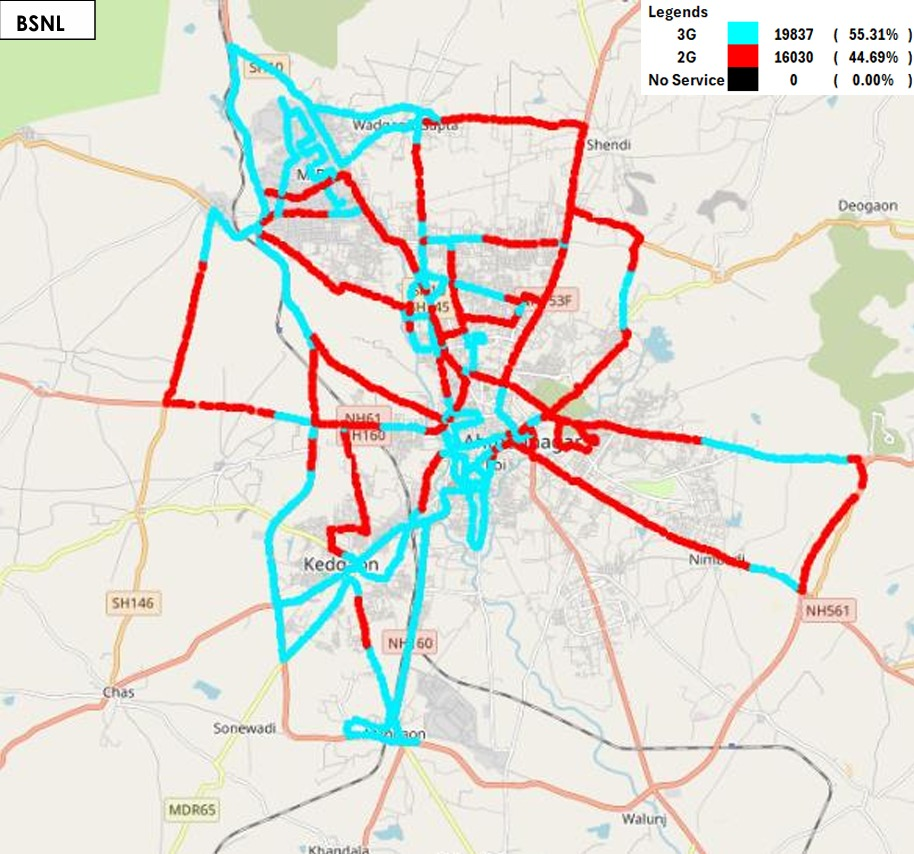

Airtel: Solely Reliant on 2G in the 1800 MHz Band
Airtel’s operations in Maharashtra, including Ahmednagar, highlight its complete dependence on 2G services delivered over the 1800 MHz spectrum band. With no 3G network and a lack of spectrum in the 900 MHz band, Airtel’s users on feature phones remain fully connected to the 2G network. This reliance on the 1800 MHz band, known for its weaker indoor and rural coverage capabilities compared to lower frequency bands, impacts the overall service quality, particularly in less urbanized areas.
BSNL: Balancing Spectrum Between 2G, 3G, and 4G
BSNL’s network strategy in Ahmednagar showcases a division of its spectrum holdings between different services. Utilizing 10 MHz in the 2100 MHz band, BSNL likely splits this between 3G and 4G, with approximately 5 MHz dedicated to each. The company also allocates 6.2 MHz in the 900 MHz band to GSM (2G) services. This distribution, while allowing a multi-service offering, potentially limits the robustness of its 4G network, affecting service consistency and reliability.
Vodafone Idea (VIL): Transitioning to 4G with a Complete 3G Shutdown
Vodafone Idea (VIL) has aggressively expanded its 4G services in Ahmednagar, entirely phasing out its 3G network. Holding significant spectrum allocations, including 14 MHz in the 900 MHz band and 12.4 MHz in the 1800 MHz band, VIL has refarmed its previous 15 MHz of 3G spectrum to bolster its 4G network. This shift underscores VIL’s commitment to enhancing its data services and staying competitive in a rapidly evolving telecommunications landscape.
Voice Call Performance: Airtel, BSNL, and VIL in 3G/2G Modes
During the drive tests, voice call performance for Airtel, BSNL, and VIL in 3G/2G network modes was meticulously assessed. The results reveal critical insights into call setup success rates, call drop rates, and overall user experience.
Airtel Performance Overview
Call Attempts: 306
Call Setup Success Rate: 99.35%
Drop Call Rate: 0.00%
Average Call Setup Time: 4.96 seconds
Handover Success Rate: 99.23%
BSNL Performance Overview
Call Attempts: 311
Call Setup Success Rate: 100.00%
Drop Call Rate: 1.93%
Average Call Setup Time: 3.77 seconds
Handover Success Rate: 100.00%
VIL Performance Overview
Call Attempts: 309
Call Setup Success Rate: 99.03%
Drop Call Rate: 0.00%
Average Call Setup Time: 3.12 seconds
Handover Success Rate: 99.08%
Highway Route Testing: Pune to Ahmednagar Insights
On the highways from Ahmednagar to Pune, and vice versa, call performance tests were extended to ensure a comprehensive view of network reliability. Key findings include:
Airtel: 100% call setup success on both routes, with drop call rates of 1.45% (Ahmednagar to Pune) and 2.70% (Pune to Ahmednagar).
BSNL: Achieved 100% call setup success but experienced higher drop call rates of 4.35% and 8.86% on the respective routes.
VIL: Maintained a 100% call setup success rate and a minimal drop call rate of 2.67% on the Pune to Ahmednagar route, with 0.00% on the return route.
Signal Strength Distribution
The distribution of signal strength in the 3G/2G network mode presents a clear picture of the network’s reach and stability:
Airtel: 26% of samples showed excellent signal strength.
BSNL: 13% of samples fell into the excellent category.
VIL: 18% of samples exhibited excellent signal strength.
BSNL’s Network Challenges
BSNL’s overall 3G/2G mode performance across the LSA is characterized by a 3.49% drop call rate, which significantly surpasses the industry benchmark of 2%. VIL’s superior metrics, with a call setup success rate of 96.87% and a drop call rate of 0.46%, highlight its competitive advantage in the region.
This detailed analysis of the drive test in Ahmednagar provides an in-depth understanding of the current network landscape for 3G/2G services. As operators like VIL continue to phase out older technologies in favor of 4G, the focus on enhancing data services and network reliability remains paramount. Meanwhile, challenges persist for operators like BSNL, who juggle multi-service offerings with limited spectrum resources.
Analysis of Network Utilization and Technology Affinity in Maharashtra LSA


Airtel: Dominance in 4G with Indoor Coverage Challenges
In Ahmednagar, Airtel demonstrates a significant reliance on its 4G network, with 90.2% of its users connected to 4G. This indicates Airtel’s strategic allocation of all sub-3500 MHz spectrum to 4G services, including its 10 MHz in the 2100 MHz band. Airtel’s 5G presence seems limited to the 3500 MHz band, with no signs of mid-band or lower-band spectrum refarming for 5G deployment.
A major limitation for Airtel is its absence of spectrum in the 900 MHz band, negatively affecting indoor coverage and penetration. Even with potential future 5G deployments in the 1800 MHz band, the lack of sub-GHz spectrum will likely continue to hinder Airtel’s indoor network performance.
BSNL: Enhanced 4G Coverage with Subpar Network Quality
BSNL has made strides in expanding its 4G coverage in Ahmednagar, with users spending 58.02% of their time on 4G and 31.77% on 3G. This suggests BSNL’s deployment of 4G services in the 700 MHz band and a portion of its 2100 MHz spectrum, while the remaining 2100 MHz spectrum supports 3G services.
Despite these efforts, BSNL’s data performance remains weak, with average download and upload speeds of 1.75 Mbps and 1.45 Mbps, respectively. This reflects either a sparse distribution or suboptimal optimization of BSNL’s 4G infrastructure, resulting in inconsistent and slow data services.
Reliance Jio (RJIL): Predominant 4G Usage with Limited 5G Expansion
Reliance Jio (RJIL) showcases strong 4G dominance in Ahmednagar, with devices spending 83.25% of the time on 4G and 16.75% on 5G. Despite RJIL’s 10 MHz allocation in the 700 MHz band for 5G, the limited time spent on 5G suggests either inadequate coverage or insufficient densification of its 5G network compared to its 4G infrastructure in the 800 MHz band.
An optimized 700 MHz 5G network deployment would likely result in a higher percentage of time spent on 5G, particularly in auto-selection mode, indicating room for improvement in RJIL’s 5G rollout strategy.
Vodafone Idea (VIL): Fully Optimized 4G Network
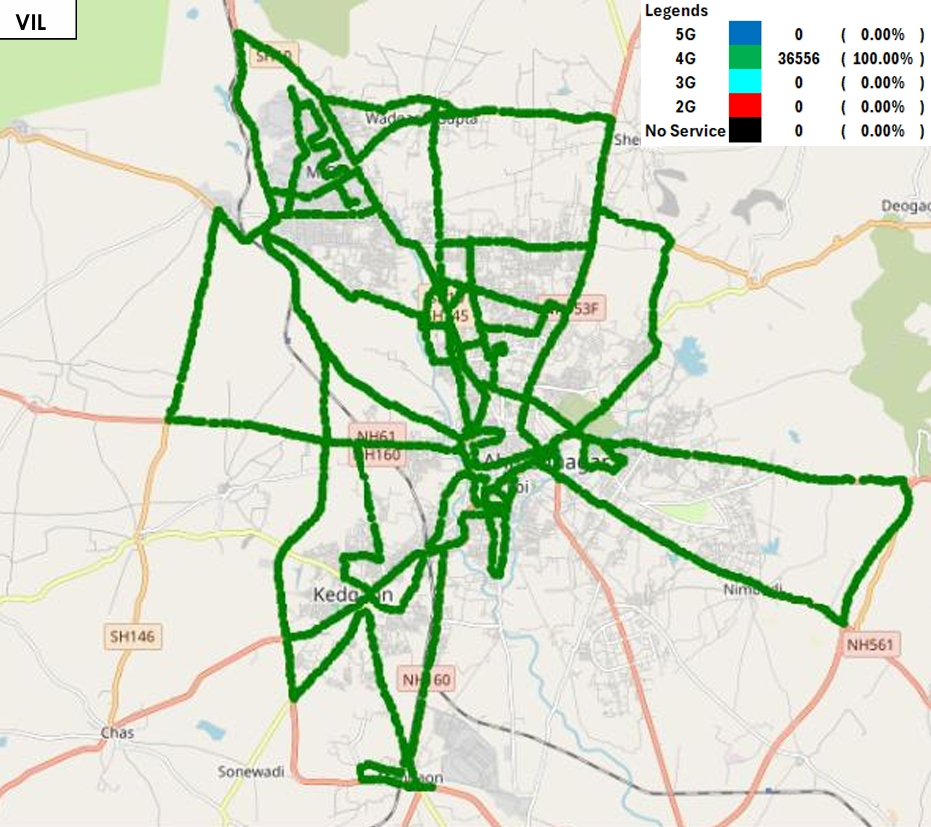
Vodafone Idea (VIL) stands out with a 100% utilization of its 4G network, reflecting the complete shutdown of its 3G services in Ahmednagar. VIL’s substantial spectrum holdings, including 14 MHz in the 900 MHz band and 12.4 MHz in the 1800 MHz band, are dedicated entirely to enhancing its 4G network. This strategy ensures consistent and reliable performance across the region.
Technology Affinity and Performance in Maharashtra LSA
Overall Network Usage Patterns:
Airtel: Predominantly uses 4G (90.19%) with limited 5G (9.81%).
BSNL: Utilizes a mix of 4G (58.02%), 3G (31.77%), and 2G (10.17%), with no 5G usage.
RJIL: Primarily depends on 4G (83.25%) and 5G (16.75%).
VIL: Exclusively uses 4G, with no 2G, 3G, or 5G utilization.
3G/2G Network Mode Usage:
Airtel and VIL: Use 2G exclusively when in 3G/2G mode.
BSNL: Employs both 3G (55.31%) and 2G (44.69%).
Performance Insights:
RJIL: Leads in download throughput with an average of 193.80 Mbps.
Airtel: Follows with 138.30 Mbps.
VIL: Records 42.41 Mbps.
BSNL: Lags with significantly lower speeds.
Upload speeds follow a similar trend, with RJIL (36.43 Mbps) and Airtel (38.28 Mbps) outperforming VIL (13.72 Mbps) and BSNL (1.29 Mbps). Signal strength and call quality metrics also highlight Airtel and BSNL‘s varying performance levels.
Hotspot Performance in Ahmednagar
Ahmednagar Fort: RJIL leads with 361.49 Mbps, followed by VIL (35.05 Mbps) and Airtel (4.51 Mbps). BSNL trails at 1.20 Mbps.
Bus Stand: RJIL (190.96 Mbps) and Airtel (175.60 Mbps) dominate, with VIL at 89.18 Mbps and BSNL at 2.33 Mbps.
Civil District Hospital: RJIL (161.84 Mbps) and VIL (49.78 Mbps) perform well, while Airtel and BSNL lag behind at 51.21 Mbps and 1.77 Mbps, respectively.
This detailed analysis offers valuable insights into the network utilization and technology preferences of major telecom operators in Ahmednagar and the broader Maharashtra LSA, as observed in the October 2024 drive tests.
Spectrum Utilization and Network Strategy by Key Operators
An in-depth analysis of spectrum utilization and network strategy reveals how telecom companies prioritize their resources. Operators like Airtel and Jio, with vast spectrum holdings, strategically allocate bands to balance coverage and capacity. For instance, Airtel’s use of the 900MHz band for 4G ensures wider coverage, while higher bands like 2100MHz cater to capacity needs, improving mobile broadband speeds.
Jio’s approach involves leveraging its 700MHz spectrum for SA 5G, offering better coverage and expansive coverage, and utilizing higher bands (850MHz, 1800MHz, 2300MHz) and mid-band (3.5 GHz) for 4G and 5G respectively, ensuring a robust data experience. However, the transition to 5G is gradual, evident in the significant time spent by users on 4G networks. Spectrum allocation directly impacts network performance, influencing download speeds, coverage, and user experience.
This analysis underlines the need for a balanced spectrum strategy to cater to diverse consumer needs. While lower bands like 700MHz and 900MHz are crucial for wide-area coverage, especially in rural regions, higher bands are essential for capacity augmentation and delivering high-speed mobile broadband in densely populated areas.
Operator Challenges in Upgrading to 5G
While India has made strides in 4G deployment, the transition to 5G presents a unique set of challenges for telecom operators. These challenges are multi-faceted, encompassing financial constraints, technological hurdles, and regulatory complexities. Addressing these roadblocks is crucial for India to realize its 5G ambitions and unlock its true economic potential.
Limited access to affordable spectrum, the high cost of deploying 5G infrastructure, and the need for skilled manpower pose significant challenges. Additionally, regulatory uncertainties surrounding spectrum allocation and pricing further complicate the transition. Overcoming these hurdles requires a collaborative effort between the government and telecom operators.
Financial and Technological Hurdles
Upgrading to 5G requires substantial capital expenditure for acquiring spectrum licenses, deploying new radio (NR) equipment, and upgrading backhaul infrastructure. The financial hurdles are particularly acute for operators still recovering from the impact of intense competition, regulatory levies, and the financial strain of acquiring expensive spectrum in previous auctions.
Technological hurdles also present a significant challenge. Transitioning from 4G to 5G necessitates a fundamental shift in network architecture, requiring operators to invest in new technologies, software, and network management systems. Additionally, ensuring seamless interoperability between existing 4G and new 5G infrastructure adds another layer of complexity to the deployment process.
The lack of a robust and affordable 5G device ecosystem further complicates the transition. The high cost of 5G smartphones poses a barrier to mass adoption, particularly in a price-sensitive market like India. This situation necessitates a collaborative effort between device manufacturers, operators, and the government to drive down device costs and make 5G accessible to a wider audience.
Spectrum Allocation Issues and Efficiency
The availability of adequate and affordable spectrum is fundamental for the successful deployment of 5G wireless networks. However, spectrum allocation in India has been plagued by delays, high reserve prices, and limited availability in desired frequency bands, hindering operators’ ability to roll out 5G services efficiently.
Moreover, the existing spectrum holdings of operators are fragmented across different bands, leading to inefficiencies in spectrum utilization. This fragmentation necessitates the deployment of multiple network technologies, increasing costs and complexities for operators. A more streamlined and efficient spectrum allocation process is crucial to unlocking the full potential of 5G in India.
Addressing spectrum-related challenges requires a collaborative approach involving the government, the regulator, and telecom operators. Key steps include releasing more spectrum in lower and mid-frequency bands suitable for 5G, adopting a transparent and market-driven pricing mechanism for spectrum auctions, and facilitating spectrum sharing and trading arrangements among operators to promote efficient spectrum utilization.
The Impact of Limited 5G Implementation on Consumers
The limited and inconsistent implementation of 5G in India has significant ramifications for consumers. The lack of widespread 5G coverage restricts users from experiencing the transformative benefits of enhanced mobile broadband, as highlighted in reports from OpenSignal, such as significantly faster download and upload speeds, ultra-low latency, and seamless connectivity, emphasizing the importance of partnerships with companies like Ericsson.
Moreover, the slow pace of 5G adoption hinders the development of a robust 5G ecosystem, limiting the availability of innovative applications and services that leverage the capabilities of 5G technology. This delay potentially widens the digital divide, leaving a vast segment of the population without access to the latest advancements in connectivity.
User Experience and Service Quality
The current state of 5G implementation in India directly impacts user experience and service quality. The limited coverage, inconsistent speeds, and reliance on existing 4G infrastructure lead to bottlenecks, translating into a less-than-optimal mobile network experience for consumers.
The lack of widespread 5G availability means that users often experience slow loading times, buffering issues with streaming services, and difficulty accessing data-intensive applications, particularly in crowded areas or during peak hours. This situation can be frustrating for consumers who expect a seamless and high-quality mobile experience with minimal latency, ideally around 30 ms.
Furthermore, the digital divide is exacerbated by the uneven pace of 5G deployment. While urban areas benefit from relatively better 5G coverage, rural and remote regions are often neglected, further widening the gap in access to quality internet services. This disparity underscores the need for inclusive 5G deployment strategies that prioritize bridging the digital divide and ensuring equitable access to digital opportunities.
The Digital Divide and Its Implications
The limited availability of fiber backhaul for the 5G rollout risks exacerbating the existing digital divide in India. With operators primarily focusing on urban areas for initial mobile backhaul 5G deployments, rural regions are lagging behind in experiencing the benefits of this transformative technology. This disparity in access to high-speed internet can have profound socio-economic implications.
Limited connectivity hinders access to education, healthcare, and economic opportunities in rural areas. Moreover, the lack of reliable internet infrastructure discourages investment and economic development in these regions, further widening the gap between urban and rural India.
Bridging the digital divide requires a concerted effort from both the government and telecom operators. This includes providing financial incentives for 5G deployment in underserved areas, promoting infrastructure sharing among operators to reduce deployment costs, and implementing policies that encourage affordable access to 5G devices and data plans for consumers in rural regions.
Strategies for Accelerating 5G Adoption
Accelerating 5G adoption in India requires a multi-pronged approach involving government support, regulatory reforms, and innovative network deployment strategies from telecom operators. Addressing the financial and technological barriers hindering 5G rollout is crucial for unlocking the technology’s transformative potential.
The government plays a pivotal role in creating a conducive environment for 5G growth. This involves streamlining spectrum allocation processes, promoting indigenous manufacturing of 5G equipment, and fostering public-private partnerships to drive innovation in 5G use cases.
Government Policies and Regulatory Support
The Indian government has a critical role in accelerating 5G adoption through effective policies and regulatory support. This includes streamlining the process for obtaining permits and approvals for 5G infrastructure deployment, creating a transparent and predictable regulatory framework for spectrum allocation and pricing, and fostering an environment that incentivizes investment in the telecom sector.
Furthermore, the government can drive 5G adoption by promoting its use in various sectors, such as healthcare, education, and transportation, including autonomous cars. Creating testbeds and sandboxes for innovative 5G use cases can encourage the development of new applications and services that leverage the power of 5G technology.
Promoting the development of smart cities with integrated 5G infrastructure is another avenue for the government to boost 5G adoption. By incorporating 5G into its Digital India vision, the government can transform urban landscapes and improve the quality of life for citizens while creating a thriving market for 5G-enabled services.
Innovations in Network Deployment and Spectrum Usage
Telecom operators can accelerate 5G adoption through innovative network deployment strategies and efficient spectrum usage. This includes:
Embracing Open RAN architectures: Embracing Open RAN architectures can lower deployment costs and foster greater innovation in the telecom sector by opening up the network ecosystem to a wider range of vendors.
Dynamic Spectrum Sharing (DSS): Implementing Dynamic Spectrum Sharing (DSS) allows operators to utilize existing spectrum holdings for both 4G and 5G services, maximizing spectral efficiency and facilitating a smoother transition to 5G.
Network Slicing: Network slicing enables operators to create customized network slices tailored to specific use cases, optimizing network resources and improving the performance of critical applications.
Investing in research and development to explore new 5G technologies and applications can lead to the development of innovative solutions for the Indian market. By fostering a culture of innovation, collaboration, and customer-centricity, telecom operators can overcome the challenges of 5G deployment and unlock the full potential of this
transformative technology.
Case Studies of Successful 5G Deployment Globally
Examining successful 5G deployments globally offers valuable lessons for India. South Korea, for instance, witnessed rapid 5G adoption due to its government’s proactive policies, early spectrum allocation, and a collaborative approach between operators and stakeholders. Similarly, the United States’ focus on millimeter-wave (mmWave) spectrum has enabled high-speed 5G deployments in densely populated urban areas, accelerating
the development of innovative 5G use cases.
Analyzing these success stories highlights the importance of:
Early and strategic spectrum allocation: Making ample spectrum available in suitable bands at reasonable prices encourages swift network deployment and healthy competition.
Government support and public-private partnerships: These collaborations can accelerate infrastructure development, promote innovation, and address regulatory hurdles.
Focus on digital literacy and skills development: Equipping the workforce with the necessary skills to leverage 5G technologies is crucial for maximizing socio-economic benefits.
Lessons from South Korea and the United States
South Korea’s success story in 5G deployment highlights the effectiveness of a collaborative approach. With strong government support, network operators worked together to establish a nationwide 5G network within a short span. This collaboration extended to device manufacturers, ensuring the availability of affordable 5G smartphones, fueling rapid adoption.
The United States, meanwhile, adopted a different strategy by focusing on high-band millimeter wave (mmWave) spectrum. While offering exceptional speeds, mmWave’s limited range necessitated dense infrastructure deployment, making it ideal for cities. This strategic allocation allowed the US to establish itself as a leader in 5G innovation, particularly in areas such as fixed wireless access and industrial automation.
Learning from these global leaders, India can adopt a hybrid approach. Utilizing its 700MHz spectrum for widespread coverage, like South Korea, while allocating higher bands for capacity-intensive urban deployments, similar to the US model, can create a robust and balanced 5G ecosystem.
Adapting Global Best Practices to the Indian Context
While adopting global best practices is crucial, adapting them to India’s unique context is paramount for successful 5G rollout. This requires considering factors such as India’s vast geographical diversity, varying population densities, and socio-economic conditions.
For instance, while mmWave spectrum holds promise for urban areas, its limited propagation makes it less suitable for rural India. Therefore, a balanced approach is necessary, utilizing lower bands like 700MHz for wider coverage and deploying higher bands strategically in dense urban pockets.
Moreover, affordability remains a crucial factor in driving mass 5G adoption in India. Facilitating the development of a robust and affordable 5G device ecosystem, promoting innovative financing models, and offering flexible data plans can make 5G accessible to a larger population, bridging the digital divide and driving equitable growth.
Conclusion
India’s 5G implementation journey is marked by significant challenges and opportunities, as highlighted by the latest TRAI report. Operators are facing hurdles in spectrum allocation and network performance, with financial and technological constraints at the forefront. The drive test analysis across cities like Delhi and Hyderabad reveals a clear trend: despite the hype, Indian telecom operators are still heavily dependent on 4G networks.
Reliance Jio’s aggressive marketing of its Standalone 5G network contrasts with the reality of its limited deployment density, which forces users to rely predominantly on 4G. Airtel, while abandoning its 3G network, is cautious in its 5G expansion, maintaining a strong foothold in 4G. BSNL’s fragmented 4G deployment and inefficient spectrum use hinder its transition to 5G. Meanwhile, Vodafone Idea focuses on 4G optimization but shows little progress in adopting 5G.
These insights underscore the gap between 5G promises and the current state of network deployment. India’s path to a robust 5G ecosystem demands comprehensive government policies, regulatory support, and innovative strategies. By drawing on global best practices and adapting them to local needs, India can bridge the digital divide and accelerate its 5G adoption.
Frequently Asked Questions
Why is India lagging in 5G deployment?
India’s lagging 5G deployment is primarily attributed to the high cost of spectrum, financial constraints faced by operators like Reliance Jio, delays in spectrum allocation, and the need for a more supportive policy framework.
What are the main challenges faced by operators in upgrading to 5G?
Upgrading challenges for operators include substantial financial constraints for infrastructure investments, technological hurdles in transitioning to 5G, the need for enhanced spectrum efficiency, and navigating complex regulatory issues.
Can 5G significantly improve internet speeds for the average consumer?
Yes, 5G can significantly boost internet speeds, enhance user experience with mobile broadband, enable low-latency applications, and support the growing data consumption demands of the average consumer.
How can the Indian government support 5G adoption?
The Indian government can support 5G adoption through favorable regulatory policies, incentivizing infrastructure development, providing innovation incentives, and promoting public awareness of 5G’s benefits.
What lessons can India learn from global 5G success stories?
India can learn from global 5G success by prioritizing early and strategic spectrum allocation, adapting policies to its context, focusing on network strategy and coverage, and prioritizing consumer benefits and affordability.
Comments