Telecom Tariff Hike: Balancing ARPU and Usage Trends
Updated: Apr 24

Key Highlights
Telecom service providers implemented telecom tariff hikes in July, aiming to improve ARPU and financial sustainability.
Airtel is expected to see the most substantial ARPU growth, followed by Jio and Vi.
Subscriber churn is anticipated as a result of the price increase, with BSNL potentially benefiting.
Despite ARPU gains, there’s a noticeable decline in average wireless data usage per subscriber.
The long-term impact of tariff hikes on 5G adoption and the overall telecom landscape remains to be fully assessed.
Introduction
The Indian telecom sector witnessed a significant development as major telecom service providers implemented tariff hikes in July. This strategic move, the first of its kind since the last tariff hike in November 2021, aimed to bolster the financial sustainability of the industry. However, the implications of this decision extend beyond mere revenue enhancement, impacting subscriber behavior and data usage trends in a complex interplay of factors.
The Impact of Tariff Hikes on ARPU and Subscriber Behavior
One of the immediate and apparent outcomes of tariff hikes is the increase in Average Revenue Per User (ARPU), a key indicator of profitability for telecom companies. This surge in ARPU values signals a potential turnaround for the industry, allowing telecom service providers to invest in infrastructure upgrades and expand their service offerings. However, this financial gain might come at the cost of subscriber churn, as price-sensitive users might seek more affordable alternatives.
Analyzing the Surge in ARPU Values Post-Hike
The recent tariff hikes, the first since November 2021, have significantly impacted ARPU across all major telecom operators. While all three private players – Reliance Jio, Bharti Airtel, and Vodafone Idea – benefited, experts suggest Airtel might witness the most substantial growth. This projection stems from Airtel’s evolving subscriber base, increasingly composed of users who are less sensitive to price fluctuations and prioritize quality of service. The Telecom Regulatory Authority of India (TRAI) closely monitors these trends. Notably, Reliance Jio’s ARPU growth is expected to be more gradual, largely attributed to a considerable portion of its user base being subscribed to longer-term plans.
Prepaid vs. Postpaid: Divergent ARPU Growth Trajectories
An intriguing aspect of the post-tariff-hike scenario is the contrasting ARPU growth observed in the prepaid and postpaid segments. While both segments experienced an uptick, the growth rate for postpaid plans has consistently outpaced that of prepaid plans. This trend can be attributed to the stickier nature of postpaid subscriptions. Postpaid users, often associated with higher ARPU, are less likely to switch operators due to the convenience and added benefits associated with these plans. This difference in growth trajectories presents both challenges and opportunities for telecom service providers like Bharti Airtel and Vodafone Idea, demanding tailored strategies for each segment.
Surge in Prepaid Segment Fuels ARPU Growth
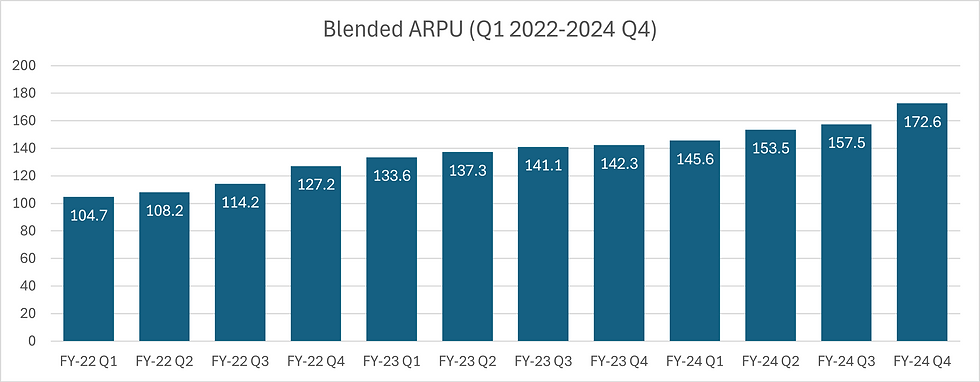
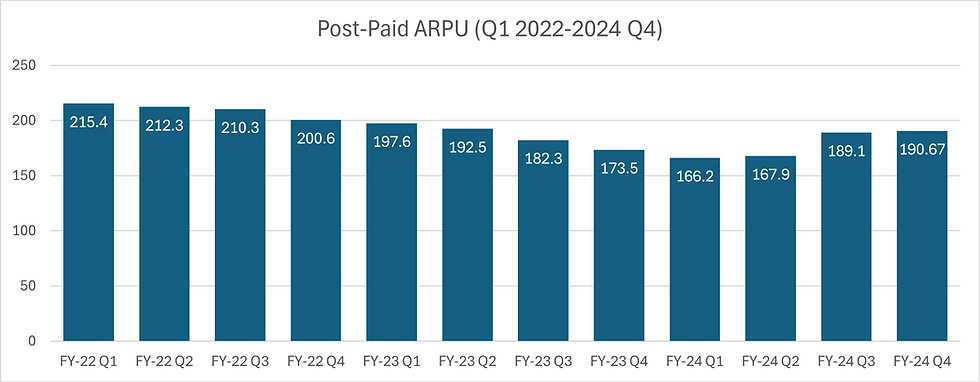
The wireless telecommunications industry is experiencing notable expansion, with the Average Revenue Per User (ARPU) witnessing a remarkable increase of 9.5%. This rise in ARPU elevated the figure from ₹157.5 in the previous quarter to ₹172.6 in the current quarter. A closer examination reveals that a substantial portion of this growth originated from the prepaid segment, where ARPU surged by 10.5%, climbing from ₹154.8 to ₹171. In contrast, the postpaid segment displayed only a modest increase of 0.8%, rising from ₹189.1 to ₹190.7. The trends illustrated in the figure below provide further insights into these dynamics.
Understanding the factors behind this ARPU growth is crucial. The prepaid segment’s robust performance can be attributed to various elements, including a growing subscriber base that favors flexible pricing and varied service options. Meanwhile, the postpaid segment’s slower growth suggests a need for telecom providers to innovate and enhance offerings to retain customers in a competitive market.
As the telecom industry continues to evolve, tracking these ARPU trends will be essential for stakeholders aiming to optimize their strategies and address changing consumer behaviors effectively.
Modest ARPU growth in the Postpaid Section
In Q.E. September 2024, the postpaid ARPU reached Rs. 190.67 per month, significantly outpacing the prepaid segment, which recorded an ARPU of Rs. 171 during the same period. This rise in postpaid ARPU underscores the growing value of postpaid customers to telecom operators, as they generally exhibit higher spending patterns and more stable usage behavior.
Overall, the blended ARPU saw a substantial increase of 9.60%, climbing from Rs. 157.45 in Q.E. June 2024 to Rs. 172.57 in Q.E. September 2024. This growth reflects the telecom sector’s ability to boost revenue through strategic pricing and service enhancements. A deeper dive into the data reveals that private service providers were the primary drivers of this growth, with their ARPU rising by 9.15%, from Rs. 164.60 to Rs. 179.67 over the same period.
ARPU variations across different telecom circle categories also paint an intriguing picture. Circle A regions boast the highest postpaid ARPU at Rs. 219.09, accompanied by a blended ARPU of Rs. 196.17, indicating robust revenue potential in these areas. Metropolitan circles follow closely with a postpaid ARPU of Rs. 197.52 and a blended ARPU of Rs. 155.03, reflecting the high concentration of urban users with greater spending capacity. Conversely, Circle B and Circle C regions show lower postpaid ARPUs of Rs. 160.85 and Rs. 165.20, respectively, suggesting that these areas might require targeted strategies to unlock higher revenue potential.
Growth in ARPU Driven Mostly by Data Services
An in-depth analysis of the Average Revenue Per User (ARPU) composition unveils a consistent pattern: most of the growth stems from data services. This highlights the increasing significance of data within the telecom revenue landscape. As users continue to consume more data-driven services, telecom providers are seeing a substantial uplift in ARPU primarily due to this segment, while other revenue streams, such as voice services, show only modest growth.
The figures above and below illustrate these trends in detail, presenting a clear picture of how data services are not just a contributing factor but a major driver of ARPU enhancement in the industry. This data-centric growth reflects the changing preferences of consumers who are favoring data plans over traditional voice offerings, and signifies a shifting paradigm in the telecom sector where robust data services are becoming pivotal for sustaining revenue growth.
The Unseen Costs of Tariff Increases: A Deep Dive into Data Usage Trends
While the focus remains on the positive impact of tariff hikes on ARPU, a crucial aspect often overlooked is the potential effect on data usage patterns. As prices rise, consumers tend to become more conscious of their data consumption, leading to a decline in overall data usage.
The Decline in Average Wireless Data Usage: What the Numbers Reveal
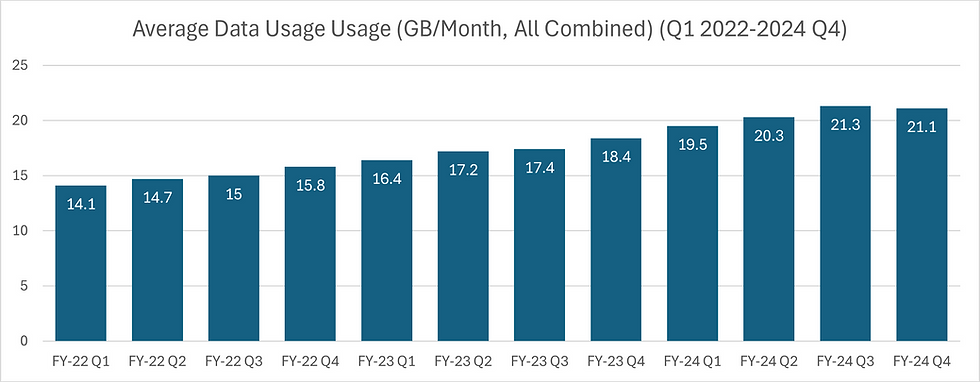
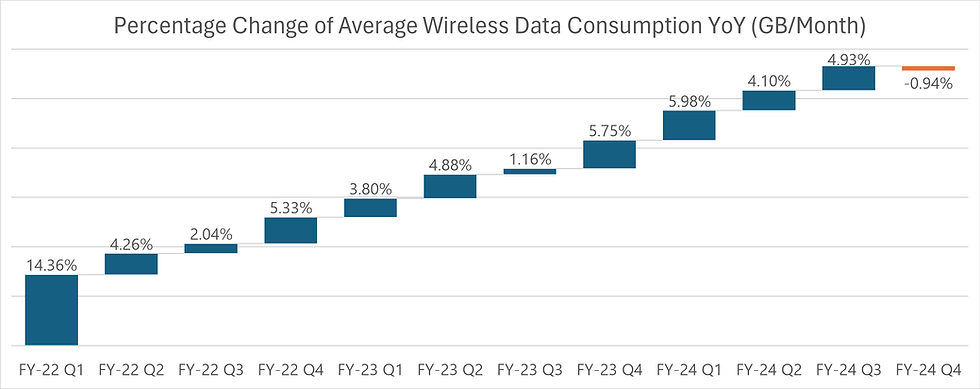
In a surprising turn of events, recent data reveals a decline in average wireless data usage per subscriber, marking the first drop in several quarters. The average monthly data consumption has dipped from 21.30 GB to 21.10 GB, a 0.94% decrease. This shift is particularly notable given the backdrop of rising tariffs, which appear to have influenced subscribers to reconsider their data usage patterns. The trend highlights a growing consumer sensitivity to pricing in an increasingly cost-conscious environment.
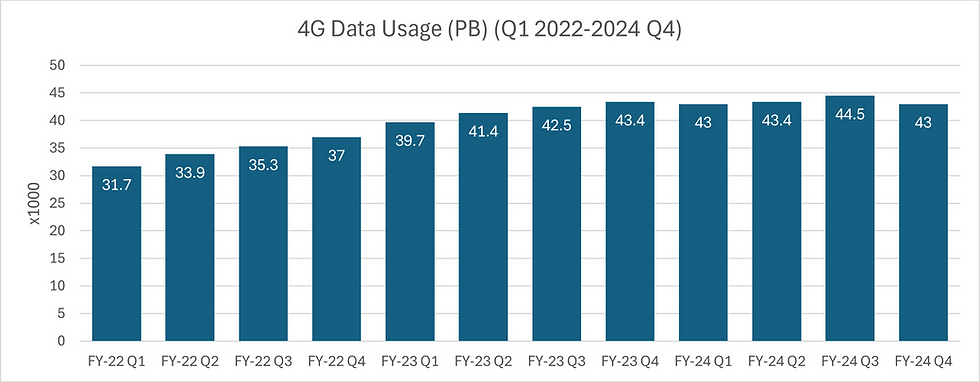
A closer examination of the data shows significant changes across different network types. Total 4G data usage has contracted notably, falling by 3.1% from 44,482 PB to 43,083 PB. This reduction emphasizes the pivotal role of 4G in the current market, as it remains a dominant technology for many users. The decline in 4G usage suggests that users are adjusting their consumption in response to economic pressures and higher data costs.
In contrast, 2G data usage has experienced a dramatic surge, soaring by 40% from 47 PB to 66 PB. This unexpected growth likely reflects increased activity among rural users or those relying on older devices. The resurgence of 2G usage underscores the enduring relevance of legacy networks in certain demographics, particularly in areas where newer technologies have yet to achieve widespread penetration.

Meanwhile, 5G data usage continues its upward trajectory, albeit at a slower pace. The growth rate has decelerated to 12.11%, with total usage rising from 11,383 PB to 12,762 PB. This slowdown marks a stark contrast to the previous quarter’s impressive growth rate of 28%, suggesting that while 5G adoption is still progressing, it may be encountering early market saturation or user hesitation amid economic uncertainties.

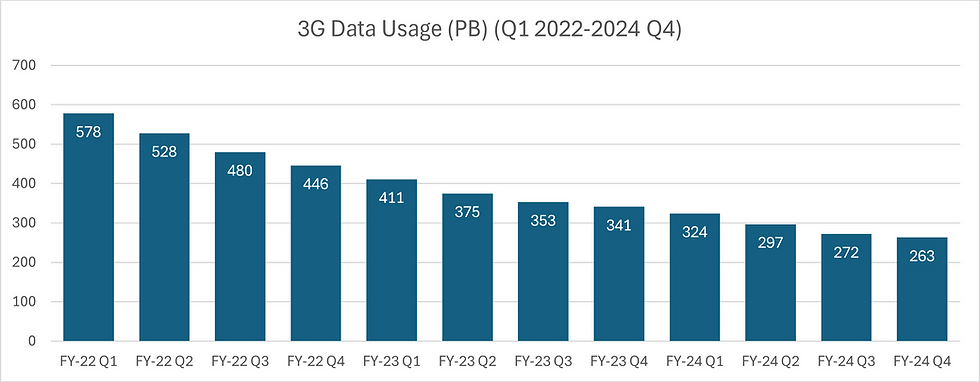
Lastly, 3G data usage continues to wane, with a 3.31% decline from 272 PB to 263 PB. The steady reduction in 3G usage aligns with the broader industry trend of phasing out older technologies in favor of more advanced networks. These shifts in data usage patterns reflect the complex interplay of technological advancements, pricing strategies, and consumer behavior, indicating that users are becoming increasingly mindful of their data
consumption amidst economic challenges and/or upgrading to the newer 4G/5G devices.
4G vs. 5G: How Tariff Hikes are Shaping Network Preferences
The rollout of 5G has brought about an interesting dynamic in the Indian telecom market. While 5G penetration is gradually increasing, 4G continues to be the dominant network. The July tariff hikes, however, may accelerate the transition to 5G. As operators aim to incentivize 5G adoption, they are bundling attractive data packages with 5G plans, making them more enticing than 4G counterparts.
Sep 2024 Quarter | 4G Data Usage (PB) | 5G Data Usage (PB) |
Total Data Usage | 43.1 | 12.8 |
Data Usage Contribution | 70.7% | 22.7% |
This trend suggests a potential shift in network preferences, with users gradually warming up to the prospect of faster speeds and enhanced capabilities offered by 5G.
Impact of Tariff Hikes on Low-Income Consumers
The impact of tariff hikes on low-income consumers is a critical consideration in the evolving telecom landscape. As telecom prices increase, the financial burden on these consumers intensifies, raising significant concerns about accessibility and affordability. For many low-income households, telecom services are not just a luxury; they are essential for effective communication and access to vital information.
Recent studies indicate that due to ongoing tariff hikes, many low-income customers have opted to eliminate their alternate numbers altogether, further limiting their connectivity options. This troubling trend forces consumers to reconsider their service plans, often leading them to downgrade their subscriptions or discontinue services completely. Such a shift not only restricts their connectivity but also diminishes their access to crucial digital services that support education, employment, and healthcare.
Telecom operators must acknowledge that the ripple effects of these tariff increases can exacerbate the existing digital divide. This highlights the urgent need for flexible pricing structures and targeted plans that cater to the financial capabilities of low-income users.
Understanding these dynamics is essential for telecom companies aiming to retain a loyal customer base while fostering inclusivity in the digital era. By addressing the unique challenges faced by low-income consumers, telecom providers can create a more equitable environment that ensures everyone has access to the digital world.
Conclusion
The latest Indian Telecom Services Performance Indicators Report highlights a double-edged outcome of recent tariff hikes. While these increases have successfully driven up Average Revenue Per User (ARPU), especially in the prepaid segment, they have also led to a notable decline in overall data consumption. For the first time, average wireless data usage per user has dropped, accompanied by a significant reduction in 4G data consumption. This suggests that consumers may be feeling the strain of higher prices, potentially signaling a tightening elasticity of demand for wireless services.
This trend aligns closely with insights from Monthly Per Capita Expenditure (MPCE), where rising costs were shown to influence consumer spending habits. As household budgets become increasingly stretched, the telecom industry faces the challenge of balancing revenue growth through tariff hikes against the risk of declining data usage and growing subscriber dissatisfaction. If consumers continue to cut back on their data consumption in response to higher prices, telecom operators might struggle to sustain or justify further price increases.
Given these dynamics, it’s essential for telecom providers to closely monitor key performance indicators to ensure their pricing strategies remain sustainable in the long run. The industry’s ability to navigate this delicate balance will determine not only short-term profitability but also long-term customer loyalty and market stability. Staying attuned to consumer behavior and economic pressures will be crucial in crafting strategies that support both business growth and customer satisfaction in the evolving telecom landscape.
Frequently Asked Questions
How do tariff hikes impact average revenue per user (ARPU)?
By increasing the cost of telecom services, tariff hikes directly impact ARPU by potentially raising revenue while balancing out usage trends. Understanding this relationship is crucial for telecom providers seeking to optimize their pricing strategies and financial performance.
Why is there a difference in ARPU growth between prepaid and postpaid segments?
Postpaid plans generally exhibit stronger ARPU growth compared to prepaid plans. This difference stems from the higher ARPU associated with postpaid plans and the tendency of these customers to remain loyal to providers like Vodafone Idea and Bharti Airtel.
What is the effect of recent tariff hikes on data usage trends?
The July tariff hike appears to have influenced data usage patterns. Despite a slight dip in July, wireless customers are becoming more cautious about their data consumption, potentially impacting overall data usage in GB going forward.
Can the telecom sector sustain further price increases without losing subscribers?
While price increases boost ARPU, telecom service providers must carefully consider subscriber behavior. Finding the right balance will be crucial, as excessive price increases could prompt users to switch to competitors like BSNL or MTNL.
How are rural and urban areas differently affected by these tariff adjustments?
Tariff adjustments impact rural and urban areas differently. The challenge for Reliance Jio and others is to address disparities in quality of service and affordability, ensuring equitable access to services across geographies.


Comments